Attracting and retaining operators in the freight transport industry is a strategic challenge that must be addressed from a holistic perspective. Organizational culture functions like the company’s DNA, directly influencing results, growth, and organizational stability . Therefore, the daily practice of its values must be a conscious and ongoing exercise, initially carried out periodically and systematically until it becomes a habit and integrated into the organization’s daily operations.
Every organization has a culture that originates from its founders, but it isn’t always given the importance it deserves. Consequently, it becomes distorted when its interpretation and correct practice are left to the discretion of leaders, losing strength when it is precisely the fundamental source of organizational energy. This is only true if the correct interpretation is maintained and disseminated primarily through the behavior of its leaders, until it becomes the good operating habits of organizational behavior. From an axiological perspective, a virtue is a good operating habit, and a vice is a bad operating habit. What kind of habits are you promoting in your organization?
How organizational DNA is formed
Culture is built upon beliefs, values, attitudes, behaviors, and habits. This diagram explains how individual behaviors transform into collective practices that define an organization’s identity.
Beliefs → Values → Attitudes → Behaviors → Habits
Beliefs are assumptions formed from the experiences we have in community and always from the statements that a leadership figure repeatedly mentions and instills in the rest of the organization the ideas about those experiences, that is, the beliefs and their favorable or unfavorable effects when they are not respected.
This is when beliefs become values, which are the virtues or positive qualities that guide people in distinguishing right from wrong, and predispose behavior toward correct action (a good operating habit). We can call this predisposition an attitude.
Attitude precedes behavior, so it is important and key to be aware of this process because they are the basis of organizational behavior. That is, to the extent that we focus our efforts and programs on establishing what the belief system behind organizational success is, we will be able to achieve a standardization of behaviors in all members of the organization.
As the above is repeated, encouraged and rewarded, its practice will become a habit (a virtue and not a vice) and when this happens, its daily exercise is done unconsciously and permanently, and it is at this moment that it becomes integrated into the culture.
Therefore, the organization must be aware of what it is promoting through its daily behavior, not just what it says on its promotional posters. This is where the phrase “the noise of your actions prevents me from hearing what you say” comes into play .
If a company aims to be people-oriented, management should focus first on analyzing organizational behavior and then on the numerical analysis of results, since these results largely reflect its cultural system.
Organizational integration
In the transport industry there are two worlds: the one experienced by the operators and the one experienced by the administration , and integrating them requires a 360-degree vision that aligns emotions, results, strategies and working conditions.
First, we must understand the lives of our employees as individuals, whether they are young people, parents, or family members, with aspirations for self-improvement in every sense, and join them in their daily efforts to achieve their personal goals and aspirations. Few leaders understand that work is the means for personal fulfillment and must be valued and respected.
To dignify means to emotionally connect with everything people seek beyond the economic, everything that gives profound meaning to their lives. Otherwise, life becomes a boring and overwhelming routine that quickly drains their energy and empties their sense of purpose.
On the other hand, in the world that administration lives in, there are also people who live different stages and have different needs in life, and with whom the first step is to dignify their work, in order to connect with each of the team members and from this point develop a productive and lasting relationship.
Leadership and alignment
Leaders must prioritize talent management and alignment of wills through a communication process that allows all members of the organization to work towards common goals.
When we connect with each employee’s personal aspirations and goals, it becomes easier to find points of convergence with organizational goals, facilitating their achievement. Organizational goals are only achieved when they translate into benefits that allow each employee to reach their personal goals.
In this sense, leadership with a humanistic approach plays a fundamental role by prioritizing the well-being of its employees , creating an environment where they feel valued within an atmosphere conducive to their personal and family growth.
Factors of permanence
An employee’s retention within an organization depends on much deeper human factors than simple monthly financial compensation. The greatest weight of retention factors lies in more intangible, but highly important human-social factors, such as self-motivation, self-esteem, recognition, and working conditions, which together we can call Emotional Salary .
A positive environment that prioritizes Emotional Salary strengthens employee commitment and gives them a solid vision of their future where their family’s assets are secure.
Paradigm shift
In our industry, it is necessary to take a fundamental step that would take transportation in Mexico to the next level, and this is a change of paradigms that have discredited the profession of Freight Transport Operator for decades.
Some of these paradigms include thinking that the operator is a driver, a trucker, or a lorry driver, with many bad practices and negative attitudes, who must be kept at a distance and treated roughly, because that is how they respond to the demands of their work to barely reach the minimum productivity standards, and we have repeated it so many times that we no longer need to say it, just by believing that this is the way, the attitude is generated and with it a behavior that reinforces their place in the organization day after day.
The pressure to “meet the numbers” can lead to disregarding the dignity of the people behind every position in the organization and every truck driver.
This is a decision for each transport business owner; it’s not easy, but you have to take the first step. If you want to grow your business through increased sales volume, this can only be achieved with better service and a strong focus on productivity. But above all, you must treat all your employees like customers—there’s no difference. Treat your employees the way you treat your best customers.
Training and future
There is certainly a real condition that will worsen if no action is taken in time, and that is the growing disinterest in being a Professional Freight Transport Operator, but there is the option of training operators and changing the focus in their organizational environments.
Out there is a large population of Mexican men and women with great potential for world-class talent, as has been demonstrated in all the industries in which Mexican entrepreneurs have invested and excelled internationally, and transportation does not have to be the exception, but we must inspire and train them, starting by dignifying the profession under a humanistic leadership that considers within its management all the human, technical and administrative aspects that are required under a comprehensive approach.
The solution to the challenge of attracting and retaining staff, especially professional operators, is cultural and strategic, and requires leadership with a humanistic approach and a long-term vision that gives each employee certainty in their future and wealth creation.
Our youth need opportunities, and the transportation industry can provide them; they just need training . Human beings learn to love things when they understand them, and when they understand them, they master them with expertise, and when they reach this level, it becomes a vocation.
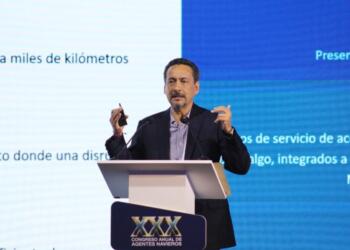
*Sergio Hernández is the Human Capital Director of Trayecto , a company that is part of Drive Is Great , the ecosystem that gives visibility to best practices in operator management .
Connect and comment with Sergio Hernández on LinkedIn .
Comment and follow us on LinkedIn: @GrupoT21