Logistics is the backbone of retail . From deciding whether a delivery will be made directly to the store or through distribution centers, to anticipating changes in demand due to weather phenomena or mass events, retail chains and their suppliers depend on information to make decisions.
However, many of the tools currently used by the industry are still based on historical data. In response, Jorge J. Quiroga, CEO of TodoRetail , pointed out that agentic artificial intelligence (AI) represents an evolution toward models capable of analyzing information in real time and generating more dynamic scenarios for operations.
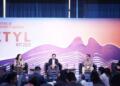
In an interview with T21 , he explained how this type of intelligence seeks to complement traditional retail and logistics planning .
“The backbone of the retail business is distribution logistics. Historically, everything has been done based on past data and forecasts built from the last few weeks of sales, but today there are tools capable of incorporating much broader variables,” he explained.
According to the expert, traditional business planning systems rely on information generated at the point of sale to project future demand. However, external factors such as weather phenomena, major events, urban mobility, or demographic changes can significantly alter these patterns.
“Data is gold, but it’s not enough to just analyze what happened. The key is to understand what’s happening in real time and build future scenarios,” he asserted.
For his part, Alejandro Canales, founder of QualtomTronix, explained that agentic AI works through autonomous agents that continuously collect, verify, and cross-reference information from multiple sources.
“An agent is like an investigator who works 24 hours a day. Artificial intelligence is only as good as the quality of the data it is fed,” he noted.
Logistics as a beneficiary of new analysis models
Combining commercial data with climate, demographic, and geospatial information opens up new possibilities for logistics.
Canales explained that the analysis can incorporate variables such as temperature, rainfall, population density, or nighttime activity to identify potential changes in consumption and anticipate supply needs.
Quiroga mentioned that, in the face of extraordinary events such as the 2026 FIFA World Cup, these types of tools would allow estimating increases in demand by region and help suppliers and commercial chains to adjust inventories, routes and logistical capacities.
“Before a truck goes out on its route, you could modify the load configuration depending on the demand being generated in a certain area,” he commented.
He even pointed out that during weather events, the first distribution networks to arrive with aid are usually those of the wholesale channel, so having up-to-date information can facilitate the planning of products such as water, medicines, batteries or basic necessities.
Beyond technology, Quiroga considered that the industry faces three main challenges.
The first is to clearly define their long-term strategy , in an environment where chains must decide between continuing to expand physical stores or strengthening omnichannel models.
The second involves improving the relationship between suppliers and purchasing departments .
“There is ongoing frustration between both sides. They should work in a much more integrated way to better serve the end consumer,” he noted.
The third challenge is professionalization . Despite the sector’s economic importance, Quiroga believes there is still a lack of specialized retail training in Mexico, which limits the development of skills in areas such as procurement, market analysis, and category management.
Despite the economic challenges and the slowdown in consumption, the TodoRetail executive indicated that the country maintains enormous potential for trade growth.
“We have to believe in Mexico. The market is constantly changing, and companies have to learn to move with it. You can no longer remain static,” he stated.
In that context, the specialist assured that agentic artificial intelligence, such as the RetailTronix retail map , will not replace human decision-making, but could become a tool to improve market visibility and make commercial and logistical planning for retail more efficient .
Comment and follow us on LinkedIn: @Jennifer Galindo / @GrupoT21