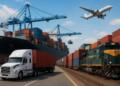
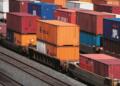
Deacero Logistics began to redraw its transportation strategy in North America with a more aggressive bet on intermodal , a segment in which it seeks to migrate part of the cargo it currently moves by truck to rail, with the aim of gaining operational efficiency, reducing costs and cushioning the impact that steel tariffs have had on the profitability of the industry.
The company plans to expand its intermodal routes in Mexico, the United States, and Canada during 2026 , following a strategy that combines logistical optimization with commercial expansion. For Deacero, the U.S. market represents a strategic priority, not only because of its potential volume but also because of the need to maintain margins in a more restrictive business environment.
“We need to capitalize on the United States; it’s a very important market for us. The steel industry has been greatly affected by tariffs, and finding lower-cost transportation routes allows us to remain profitable in different markets,” says Arturo Rodríguez, Deputy Director of Global Transportation and Logistics at Deacero and Deacero Logistics, in an interview with T21.
In that growth map, Chicago appears as one of the most attractive routes for the company , although Canada is emerging as an even more strategic market. The absence of tariffs and the possibility of moving larger volumes per container, compared to the restrictions on trucking, place cities like Toronto, Montreal, and Quebec City on the company’s intermodal roadmap.
“Canada is a very attractive market for us because there are no tariffs, we have greater market penetration, and we ship higher volumes; it’s an extremely important route. Toronto, Montreal, Quebec City, and Chicago are potential routes. We are registered as IMCs (consolidators) with Ferromex and Union Pacific, and we are in talks with BNSF and CPKC,” he says.
Comment and follow us on LinkedIn: @Evangelina del Toro / @GrupoT21