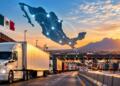
Stadiums, businesses, hotels, transportation, and avenues were jammed from mid-morning. A semi-trailer truck was stuck in endless lines while, a few kilometers away, thousands of people shouted “Goal!” wearing their favorite team’s jersey. This is how the 2026 FIFA World Cup will also begin for Mexican logistics.
A Deloitte analysis estimates that the tournament could raise Mexico’s economic growth from 1.3% to 1.4% in 2026, with an economic impact of up to four billion 050 million dollars.
For 39 days, with 48 teams, 104 matches, and venues spread across Mexico, the United States, and Canada, the World Cup will test the resilience of supply chains. Estimates indicate that the country expects more than 5.5 million visitors, which will increase the pressure on airports, highways, distribution centers, and urban delivery networks.
Lockton Mexico anticipates that logistics activity could grow by up to 15% as a result of the tournament , especially in freight transport, warehousing, hospitality, food and urban deliveries, so companies are accelerating investments.
In addition, the event will coincide with campaigns such as Hot Sale and retail discount seasons , periods that historically increase the movement of goods.
“We see a lot of activity in all consumer spending,” explains Pablo Ocampo, CEO of Grupo MexAmerik . He says the company has experienced a significant increase in activity since the last week of May and throughout much of June.
For SimpliRoute , the World Cup will force companies to completely rethink their logistics operations. Álvaro Echeverría, the company’s CEO, believes that many Mexican cities are already operating at their limits in terms of mobility and supply, and adding millions of visitors in a short period will lead to longer travel times, traffic congestion, and difficulties in maintaining service levels .
“We should prepare for a Black Friday in a month. It’s going to be very painful, but also very positive for commerce,” he says.
In response, companies began taking preventative measures , such as renegotiating expectations with customers and suppliers. There has also been an increase in searches for additional transportation and temporary storage capacity.
One of the most visible trends is the expansion of dark stores and micro- fulfillment centers . According to Echeverría, many companies are looking to bring inventory closer to urban areas to avoid long commutes during peak traffic days.
“The problem is not just moving more merchandise, but moving it within cities that are already saturated,” he points out.
At Autotransportes de Carga Tresguerras, preparations began months before the World Cup. The company is even directly involved in the logistics for some teams in Mexico, moving luggage, uniforms, and equipment between airports, hotels, and stadiums in Mexico City, Guadalajara, and Monterrey.
However, the company acknowledges that the real challenge lies in the delivery times.
“It’s a fact that there will be complications,” acknowledges María Guadalupe Mancera Pérez, the company’s CEO. She says that meetings are already underway with FIFA to discuss restrictions and closures in areas near stadiums.
The strategy includes strengthening last-mile deliveries, leasing additional units, and maintaining constant communication with customers regarding potential delays. Operational uncertainty, he admits , will be unavoidable.
Comment and follow us on LinkedIn: @Jennifer Galindo / @Karina Quintero / @GrupoT21