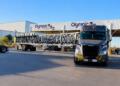
The representation of the trucking industry in the State of Mexico is being renewed at a time when operating on highways involves increasing pressure. Insecurity , overregulation, and rising costs are the main challenges that the new Board of Directors of the National Chamber of Freight Transportation (Canacar) in the state will have to address.
In that context, Paulina Montserrat Muñoz Mortara took over as state delegate with a marked stance: the chamber must cease to be just a representative body and become an entity that listens and resolves.
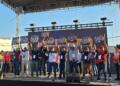
“Today we make a commitment: to be a delegation that is approachable, a delegation that listens and a delegation that acts, that not only represents, but also solves problems,” he said during his swearing-in ceremony.
From her first address, the new delegate placed the transportation sector at the center of the agenda, particularly micro and small business owners , acknowledging that they face the greatest difficulties in their daily operations. She stated that her goal is to strengthen ties with the sector and build a more proactive representation to address its challenges.

The challenge is significant. Trucking handles over 80% of the country’s goods and more than 548 million tons annually , making it a pillar of the national economy, Muñoz noted.
At the state level, the relevance is even greater. The State of Mexico is consolidating its position as one of the country’s main logistics hubs, with a high concentration of goods flows and constant transit of cargo units.
In that sense, more than 1.2 million cargo vehicles travel along the Mexico-Queretaro highway each month, reflecting the operational intensity of the region, commented Augusto Ramos, national president of Canacar.
Furthermore, around 85,000 cargo units operate in the state , which illustrates the magnitude of the activity and the need to improve its conditions, he said.
Given this scenario, security remains the sector’s main enemy, along with the shortage of operators and the need to strengthen competitiveness, according to Ramos, who warned that the challenges lie outside the industry and require coordinated work.
“The enemy is not here, the enemy is out there, it’s called insecurity… it’s called a shortage of operators… it’s called conditions for the trucking industry to be more competitive,” he said.
In that regard, he stressed the importance of maintaining permanent working groups between authorities and the private sector , especially on issues of security, infrastructure and rest conditions for operators, such as comprehensive rest stops.
The approach also aims at professionalizing the sector , both in training current operators and in attracting new profiles to an activity that he described as “dignified and well-paid”.
The event was sponsored by Samsara , a technology company focused on operational and safety solutions for the trucking industry, which supported this day of the sector in the state.
For the new state leadership, the immediate challenge will be to translate these proposals into concrete actions. Their mandate involves not only representing the industry, but also influencing the public agenda in a state that, due to its location and volume of operations, is key to the movement of goods in Mexico.
In Muñoz’s words, the goal is to put the partner at the center, dignify the carrier and demonstrate that, with joint work, the sector can move towards better operating conditions.
Comment and follow us on LinkedIn: @Karina Quintero / @GrupoT21