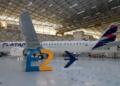
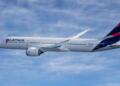
LATAM Airlines Group continues to advance its growth and fleet modernization plan, projecting to exceed 400 aircraft this year, following the addition of 41 new planes , including the first Embraer aircraft , intended to strengthen the domestic network in Brazil and provide greater operational flexibility in that market.
“This growth not only responds to a greater need for connectivity both within the region and with other international markets, but also to our conviction that the future of aviation must be more efficient and sustainable. Each new aircraft we will be incorporating will feature state-of-the-art technology that will allow us to reduce our emissions, as well as make concrete progress on our roadmap for net-zero emissions by 2050,” emphasized Sebastián Acuto, Director of Fleet and Projects at LATAM Airlines Group.
He recalled that at the close of 2025, the group reached 371 aircraft , after incorporating 26 new planes during the year, all of the latest generation, positioning itself among the 12 airlines with the largest fleet in the world.
Looking ahead to 2027, the company expects to add 27 additional aircraft, including the first Airbus XLR , a model that will allow for extended range on medium-haul routes.
By 2030, LATAM Airlines plans to add more than 130 new aircraft from various manufacturers. With this addition, it projects that more than 50% of its fleet—at least 200 aircraft—will consist of state-of-the-art models.
Acuto commented that this will allow for a reduction of between 20% and 25% in carbon dioxide (CO2) emissions compared to previous models, in addition to optimizing fuel consumption, according to data from the manufacturers.
With these advances, the firm consolidates one of the largest and most modern fleets in the region, reinforcing its competitive position and its commitment to efficiency and sustainability towards net zero emissions by 2050.
Comment and follow us on LinkedIn: @GrupoT21