In 1973, the freight transport industry underwent regulation , which defined routes and concessions. This allowed for the consolidated growth of companies, expanding to meet market needs.
In 1989, with the deregulation orchestrated by then-President Carlos Salinas de Gortari, many companies were unable to cope with an opening of the market, and those that remain to this day have had to evolve and innovate to continue on the path .
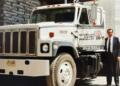
The above is the path followed by Fletes RGC (member of the Top 100 of Motor Transport® ), which emerged in 1973, and which allows it to have a solid origin and add the experience of five decades of constant evolution .
Fletes RGC’s journey has milestones that are the chassis that allow them to be protagonists in the various markets in which they participate.
Fletes RGC’s value proposition in the market is key: fulfilling commitments to customers, generating value for the market, establishing long-term, trusting relationships, a diversified portfolio of services, and a modern infrastructure.


Capacity and experience
The freight transport market has a natural condition: fragmentation; there are 220,718 business entities, which have 1,486,276 units, both trailers and tractors.
In this universe of options, companies must find differentiating factors to achieve constant progress in the sector.
For Fletes RGC, as part of showing itself as a solution for its clients and the markets it serves, territorial expansion to broaden its portfolio and area of influence has been key in its 50-year history, said Kevin Salazar, Operations Manager.
In addition to its presence, Fletes RGC has been proactive in incorporating technology to be more efficient in its operations, but also as added value for its clients to provide traceability and predictability in their shipments, and in the case of handling temperature-controlled goods, to have the peace of mind that it is operated properly .
“We are allies of our clients, where we assume a commercial partnership to share efficiencies and productivity, finding ways to establish solid relationships and where, more than a supplier, we are an ally for constant improvement,” added Kevin Salazar.
While it has a predominant presence in the temperature-controlled market, with one of the three largest fleets in the country, it also has general cargo services in various vehicle configurations, as well as specialized cargo.
Regarding its coverage, Fletes RGC has mapped the territory with various areas of focus, which they have defined as North Pacific, South Pacific, Middle Southeast, Long Southeast, Short Southeast ; in addition to its main area of influence in the Northeast and the border points of McAllen and Laredo, Texas.
To support all customer needs, Fletes RGC holds certifications to guarantee high-quality and safe services. These certifications include C-TPAT, Canacar Distinction , DUN & Bradstreet , Clean Transportation , and Reliable Resource .

Timeline
- 1973: Fletes RGC is founded, starting operations in northern Mexico with a focus on national land transport.
- 1994: The first branch is inaugurated in Alamo, Santiago, Nuevo León, marking the beginning of regional expansion.
- 1995: The branch in Umán, Mérida, Yucatán is opened, strengthening coverage in the southeast of the country.
- 1996: Parking lots are established in Cancun, expanding the operational infrastructure on the peninsula.
- 1997: The fleet is modernized with the addition of refrigerated boxes, serving the food and perishable goods sector.
- 1998: The fleet is expanded with dry vans, consolidating the presence in the general cargo market.
- 1999: Alliances are established with companies in the United States and Canada, offering international door-to-door service.
- 2000: A 100% satellite-based location system is implemented, reinforcing the security and traceability of the operation.
- 2007: A branch and maintenance workshop are opened in Atongo, Cadereyta, Nuevo León, improving operational efficiency.
- 2009: RGC Transportation Services LLC is founded to provide services in the United States and Canada.
- 2013: The Pacific Route is launched, achieving national coverage with a strategic presence in new markets.
- 2021: Dedicated schemes are expanded and advanced monitoring and telemetry platforms are implemented, positioning Fletes RGC at the forefront of technology in fleet management and operational safety.
- 2022: The fleet of dry box trailers is increased, strengthening logistical capacity.
- 2024: The maintenance and parking branch in Guadalajara is inaugurated, expanding the infrastructure network.
- 2025: A comprehensive portfolio of transportation, logistics and equipment leasing is consolidated, reaffirming Fletes RGC’s national leadership.
Comment and follow us on X: @GrupoT21