JIUTEPEC, MOR.- In the transition towards sustainable mobility , road transport faces a challenge less visible than the technology itself: making decisions in an environment where the rules, incentives and infrastructure are constantly changing.
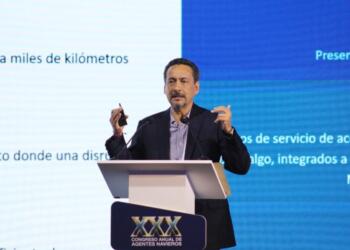
Within the framework of the 4th Meeting on Technology and Sustainable Mobility, held by the National Association of Private Transport (ANTP) , Miguel Elizalde, CEO of Mobility Sustainable Consulting , stated that the sector does not advance under a linear model, but in a dynamic scenario where each factor can alter the course.
“It’s a very complex environment… you have aspects of technology, you have aspects of regulation, infrastructure, and costs,” he explained.
Unlike other industrial transitions, there isn’t a single technology leading the way in sustainable mobility . The expert explained that multiple options coexist today—electric, natural gas, hybrid, or even hydrogen—without any one establishing itself as dominant.
This means that decisions must be based not only on trends, but on specific operating conditions.
“There isn’t one right answer… they are all related in some way,” Elizalde said, referring to factors such as total cost, business strategy, and operations.
One of the main risks, he warned, is that companies prioritize acquiring technology without having its implementation sorted out.
“Sometimes we focus on acquiring the technology and neglect operational decisions,” he noted.
This imbalance can lead to operational failures, especially when infrastructure doesn’t keep pace with investment . He even highlighted cases where companies acquire electric units without having sufficient energy capacity to operate them.
In Mexico, infrastructure development remains a major obstacle, especially for emerging technologies, he asserted. While the charging network for light vehicles has begun to expand, availability for heavy transport is practically nonexistent, forcing companies to develop their own systems.
Added to this is the lack of consistent incentives and regulation that sets a clear course, which keeps decision-making on uncertain ground.
Operators: the forgotten angle
Beyond technology, Elizalde also focused on human capital , particularly on the training of operators.
“The issue is not a lack of operators, the issue is a lack of vision,” he stated.
From their experience, one of the main obstacles is not the cost of training, but the time that applicants must stop working to train, which directly impacts their income.
Given the high infrastructure costs, the executive raised the need to explore collaborative schemes between companies.
“I’m a fan of synergies… 1+1 equals 3,” he commented. He explained that competitors can collaborate to develop infrastructure, as already happens in other markets.
These alliances would allow for shared investment and accelerated technological adoption without relying exclusively on public funding. Elizalde emphasized that the debate should not focus solely on which technology to adopt, but rather on how to integrate it into the business. In this context, the sector is forced to make decisions based on partial, comparable conditions, he said, choosing a path without certainty of the destination.
“The future doesn’t depend on just one technology… it depends on the quality of the decisions,” he concluded.
Comment and follow us on LinkedIn: Karina Quintero /@GrupoT21