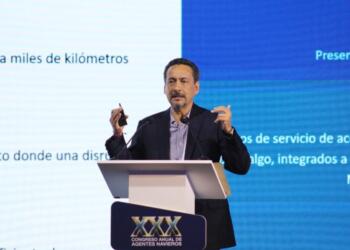
JIUTEPEC, MOR.- Sustainability in the trucking industry is beginning to be redefined, moving away from aspirational rhetoric and closer to daily operations. In an environment where electrification still faces limitations, the focus is shifting towards what is measurable today: efficiency, fuel consumption, and fleet management , according to Sergio Sánchez, Key Account Manager at International .
From the industry’s perspective, the greatest environmental impact lies not in vehicle manufacturing, but in their use. This is where energy consumption is concentrated and, therefore, where the main opportunity for emissions reduction lies.
“The biggest impact is on how vehicles are used,” Sánchez commented during the 4th Sustainable Technology and Mobility Meeting, organized by the National Association of Private Transport (ANTP) .
Under this logic, the transition to cleaner mobility does not follow a single path. While electric vehicles represent a clear objective, in the short term, diesel technology remains the backbone of freight transport , which necessitates optimizing its performance before considering a structural change, Sánchez explained.
The Mexican context reinforces this interpretation. With a vehicle fleet averaging between 18 and 20 years old, a significant portion of the vehicles operate with outdated emissions standards, widening the gap with current technologies, which are capable of reducing pollutants such as nitrogen oxides (NOx) and particulate matter by up to almost 98% compared to past decades, he emphasized.
However, incorporating these improvements is not automatic. The evolution towards more efficient engines has involved adjustments throughout the entire operational chain: from the use of new inputs, such as urea, to changes in maintenance, diagnostics, and driving.
“It’s a change in culture, product, and way of working,” Sánchez warned.
In this scenario, the industry is beginning to prioritize immediate actions. Tools such as telemetry , route optimization, vehicle parameter monitoring, and operator training are emerging as rapidly implementable solutions that reduce fuel consumption and carbon footprint without requiring disruptive investments.
The approach focuses on building efficiency from what is already available. “We can meet sustainability goals starting today with current technology,” he stated.
Beyond technology, the operator maintains a central role. Operational capability, proper use of systems, and the adoption of best practices continue to be key factors in translating innovation into tangible results.
Thus, the challenge for the trucking industry is not limited to incorporating new vehicles, but to transforming how they are used. In this equation, sustainability ceases to be a future goal and becomes an operational task of the present.