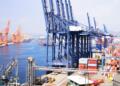
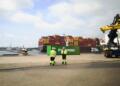
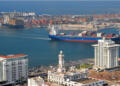
The emergence of a new player in the Lázaro Cárdenas port ecosystem is beginning to take shape following the awarding of one of the most discreet—yet strategic—projects of recent years. Porter Holding , through its subsidiary Porter Lázaro Cárdenas , won the bid to develop and operate a Multi-Purpose Terminal (TUM) which, although simplistically referred to as a “coastal shipping dock,” actually represents a much broader undertaking within the port area.
The process, initiated in February 2025 by the Lázaro Cárdenas National Port System Administration (Asipona) , concluded on August 21 of the same year with the award in favor of the group, while the contract was signed on January 26, 2026. The agreement includes a partial transfer of rights for 19 years over an area of approximately 204,000 square meters, where a terminal will be developed with the capacity to handle coastal shipping, mineral bulk, and general cargo.
According to information from the Proyectos México platform, behind Porter Lázaro Cárdenas are identified related companies such as Grupo Regio Cal, SA de CV , Porter Dos Bocas, SA de CV and Teds Latam, SA de CV , which suggests a corporate structure that combines experience in industrial, logistics and energy sectors , aligned with the logic of asset integration that characterizes the group.
The project timeline also outlines a clear path for its completion. The handover of the area will take place within 120 days of the contract signing, that is, no later than May 26, 2026. Subsequently, construction must begin within 90 days of the approval of the final project design by the General Directorate of Ports of the Secretariat of the Navy , while operations are scheduled to commence within 730 days of the area’s handover, with an estimated deadline of May 25, 2028.
Although in public discourse the project has been directly linked to the promotion of cabotage—a policy that has gained prominence on the national logistics agenda since the administration of Andrés Manuel López Obrador, albeit without much success —its design reveals a different operational logic. The inclusion of multiple types of cargo suggests that cabotage, on its own, does not yet offer sufficient scale to sustain a profitable port operation, and therefore it is integrated with other segments that allow for revenue diversification and maximize the use of the infrastructure.
This reading becomes more relevant when observing the recent performance of the port itself: during 2025, Lázaro Cárdenas handled 2,998,664 tons in cabotage activities , just 0.3% more than in 2024, according to statistics from the port authority, mainly concentrated in general cargo, mineral bulk, oil and derivatives, as well as other fluids.
This distinction is significant considering that the coastal shipping dock in Lázaro Cárdenas had been completed since 2024 but remained unoperational precisely because of the lack of an assigned operator. The tender that Porter won today not only unlocks this asset but also integrates it into a more comprehensive logistics platform , aligned with the current needs of regional trade.
Porter Holding’s entry into the Michoacán port should also be interpreted in terms of positioning. Until now, the port has been dominated by large container operators such as APM Terminals and Hutchison Ports , focused on transpacific trade. In contrast, the new TUM is targeting less visible but growing segments: industrial cargo, regional shipments, and supply chains linked to nearshoring .
In this context, Porter’s move involves not only operating a terminal, but also the possibility of integrating logistics infrastructure with other sectors where the group already has a presence, particularly in energy and project development. If this integration materializes, the company could transition from being an asset developer to an operator with a direct impact on Mexican foreign trade flows .
Thus, what began as a project perceived as “parsimonious” within the port is now shaping a quiet shift in the landscape of stakeholders in Lázaro Cárdenas . The key will lie not only in the commissioning of the coastal shipping pier, but also in Porter’s ability to transform this concession into a logistics platform that responds to—and capitalizes on—the new dynamics of trade in Mexico.
Comment and follow us on LinkedIn: @Enrique Duarte Rionda / @GrupoT21