Pressure on industrial space is beginning to redefine the logistics decisions of companies in Mexico. In an environment where physical expansion is not always viable—due to cost, availability, or location— optimizing existing space is emerging as one of the most immediate paths to sustaining operations.
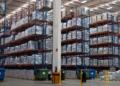
In this context, PM STEELE has focused on high-density storage solutions , a strategy that aims to increase installed capacity without altering the physical footprint. This is a significant undertaking: it involves rethinking how companies manage their inventories within already saturated infrastructure.
“The satellite system helps increase storage capacity by 35% to 60%. Therefore, companies can remain in their same physical location and only change their storage system,” explained Manuel Antonio Farías Mejía, Deputy Director of Storage Systems at the firm.
Beyond the discourse of efficiency, the technological advantage lies in its operational versatility. According to the executive, this type of solution allows for handling different loads —from food to products in refrigerated, frozen, or controlled-environment chambers—which expands its reach to industries such as beverage, pharmaceutical, and transportation.
One of the differentiating factors compared to more traditional systems, such as dynamic roller systems, lies in the use of an automated cart for moving cargo . This component, Farías Mejía pointed out, reduces the need for maintenance to occasional interventions. The latest innovation only requires battery and spare parts replacement due to use.
Even so, technological advancement is not seen as a replacement for the human factor, but rather as a complement. “This type of system helps us streamline processes and provide better customer service,” Farías stated, emphasizing that the operation still requires staff interaction.
The challenge, however, lies not only in the availability of solutions, but also in their adoption. “We are currently making progress with companies and industries. We are working to enable small and medium-sized enterprises to embrace this approach of artificial intelligence and automated systems,” he emphasized.
At that point, the lag becomes more evident. Although the incorporation of technology in logistics began to gain traction around seven years ago, implementation continues to face internal resistance. “The tools exist, the companies that offer them exist, but there isn’t freedom on the part of the companies to introduce more automation ,” he acknowledged.
Meanwhile, the company is advancing new developments outside of Mexico City, where it has identified more favorable conditions for installing specialized infrastructure. “ We are investing heavily in self-supporting structures and refrigerated storage facilities . The refrigeration sector is very interested, and we are investing significantly, making approaches to build high-stack cold storage facilities: 20, 30, or 40 meters high,” he explained.
This type of project finds resonance in regions like the Mexican Bajío , where the demand for storage for agricultural products – such as strawberries and cauliflower – requires solutions with greater density and thermal control.
The backdrop to this trend is an expanding market that is pushing for greater efficiency. According to the consulting firm Expert Market Research , the Mexican warehousing and storage market reached an approximate value of US$31.673 billion in 2025 , with a projected compound annual growth rate of 6.70% between 2026 and 2035. In this scenario, space optimization is no longer a tactical option, but a condition for competing.
Comment and follow us on LinkedIn: @Evangelina del Toro / @GrupoT21