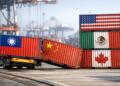
Mexico has consolidated a strategic role within supply chains , not only for Stellantis , but also in various industrial sectors, according to Evelin Nava, Director of Purchasing and Supplier Quality at Stellantis Mexico , who analyzed the evolution of the automotive supply chain and how it has behaved in the country.
At the Automotive Logistics & Supply Chain conference, Nava explained that the disruption to supply chains during the pandemic forced a rethinking of them under a regional framework. This shift placed Mexico at the center of the strategy thanks to its quality, cost competitiveness, and a logistics network capable of serving the entire American continent.
In her presentation entitled “Mexico’s Moment: Turning Localization into a Resilient, Competitive, and Compliant Supply Chain ,” the director noted that this shift to Mexico had positive results in their purchasing .
Nava reported that Stellantis has doubled its purchases in Mexico. While previously between 20% and 30% of sales for North America originated in the country, today that figure reaches 50% . This growth not only supplies the region but also extends to Europe and parts of Asia, consolidating Mexico as a key node in the global network.
However, Nava warned that the biggest challenge right now is complying with the rules of the United States-Mexico-Canada Agreement (USMCA). He pointed out that about 10% of the parts leaving Mexico still don’t meet the treaty’s requirements, which generates tariff costs . To address this, Stellantis is focusing on vertical integration and transparency.
Another key focus is leveraging Mexico’s strengths in certain areas of knowledge, while advancing the development of more complex areas such as electronics
“We have the knowledge and technology for the stamping, painting, and plastic aspects, which are already known in Mexico , so we have to develop it and take advantage of that. And then, in the long term, focus on the more difficult parts, such as the electronics,” he said.
Furthermore, the director highlighted that the relationship with suppliers has evolved towards a dynamic of greater transparency and better communication . This change opened the door to initiatives such as Matchmaker , an event that seeks to connect established suppliers with new local players to expand the supply base.
Finally, Nava concluded her remarks with a couple of calls to action for the supply chain community. She pointed out the need to challenge internal teams to identify material substitutes , such as aluminum, one of the materials most affected by tariffs. At the same time, she emphasized that strategies must not lose sight of sustainability .
“We have to think green. We know that everything that is changing with the climate is happening in logistics, of course, but we have to make sure that we don’t forget to be comprehensive, to use, to decide, and also to challenge the supply chains,” he concluded.
Comment and follow us on X: @miroslavacs / @GrupoT21