According to figures from the National Institute of Statistics and Geography (Inegi) , Mexico’s Gross Domestic Product (GDP) grew only 0.2% in the first quarter of 2025, with which the country avoided a technical recession, due to the primary sector, which involves agricultural activities, since both services and industrial production fell 0.1% in the period, considered Rodolfo Ostolaza , deputy director of Economic Studies at Banamex .
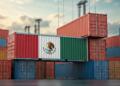
At the Banamex Dialogues event , he emphasized that production fell 0.1% during that period, and recalled that it had also shown a 1.5% decline in the fourth quarter of 2024. In this regard, he indicated that the tariffs imposed by the United States had a significant impact, “especially on the advancement of purchases by North American users.”
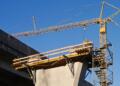
Regarding construction , he noted that civil engineering projects, including trains, airports, and others, have grown significantly in recent years, although this expansion has already concluded. He estimated that it will decline further due to a decline in public investment of approximately 14% in real terms.
Regarding services , he said that after 13 consecutive quarters of increases, this sector showed a decline in the first quarter of 2025.
Given this scenario, the specialist specified that in the last three quarters, from the third of 2024 to the first of 2025, “it has been external demand, that is, exports less imports, that has generated growth.”
In his remarks, he considered that Mexico does have a relatively better tariff position compared to other countries, as it is highly integrated with the United States, “but the key here is to understand that we will have a greater share of U.S. investment, but a smaller share.”
Ostolaza asserted that Mexico remains the United States’ main supplier of goods, although Vietnam and Taiwan are beginning to appear more prominently in this regard. He indicated that the financial institution forecasts zero growth for the country this year. “It’s possible that the economy’s stagnation will continue,” he emphasized.
Economy in the federal entities
Campeche, Tabasco, and Quintana Roo showed a drop of around 7% in GDP in 2024, according to Guillermina Rodríguez , director of Economic Studies at Banamex.
The specialist indicated that in Tabasco and Campeche, the GDP decline was due to the completion of flagship projects of the previous administration, such as the Dos Bocas refinery and the Mayan Train, while in Quintana Roo, it was due to a weak performance of the tourism sector.
“In the rest of the country, we’re seeing some signs of growth, perhaps most significantly in Nuevo León, but we also have Durango and Oaxaca, the latter two primarily driven by investments in construction,” he emphasized.
Meanwhile, Nuevo León and Chihuahua posted positive numbers in the first quarter of the year, taking advantage of the tariff situation to export, especially manufactured goods.
Inflation, with ups and downs for the remainder of the year
Paulina Anciola , deputy director of Economic Studies at Banamex, said that although inflation has been rising this year, reaching 4.5% in the first half of June, this figure is not as negative as it seems, since it is “in fact, the historical average of inflation.”
“So it’s not surprising that we’re at those figures now. In any case, we do think it will resume a downward trend, especially in June and July, which would drop inflation below 3% in July and then rebound to return to 4% by the end of the year,” he noted.
He noted that this increase is part of what’s happening within the core component (which excludes goods and services with more volatile prices or those that don’t respond to market conditions), as merchandise inflation is rising slightly faster than services inflation is falling.
“In any case, this increase in merchandise inflation was relatively expected because it had been very low in recent years and is also returning to its historical average,” he emphasized.
In this regard, he estimated that headline inflation could close the year at 4%, while core inflation would remain at 3.9%. He added that the Bank of Mexico (Banxico) is expected to make 25 basis point cuts between now and the end of 2025, which would bring the rate to 7.25%.
Regarding the exchange rate, he predicted it would close the year at around 20.6 pesos per dollar, pressured by factors such as the revision of the United States-Mexico-Canada Agreement (USMCA) , which could take place in the second half of the year.
Comment and follow us on X: @Eliseosfield / @GrupoT21