



Mexican exports maintained their dynamism during October 2026, driven mainly by the manufacturing sector, whose performance made it possible to compensate for the drop in oil sales and consolidate a surplus in the trade balance, according to figures from the National Institute of Statistics and Geography (Inegi) .
In its report on Mexico’s Merchandise Trade Balance (BCMM), the agency reported that exports reached $86 billion,009 million , representing a growth of 30.2% compared to the same month in 2025.
This increase allowed Mexico to post a trade surplus of $298 million , following a deficit of $606 million in September. The result also extended the accumulated positive balance for the first 10 months of the year to $9.552 billion .
Non-automotive manufacturing gains ground
The main driver of growth was manufacturing exports, which totaled US$81.243 billion , representing a 31.8 percent year-on-year increase. Within this segment, electrical and electronic equipment and appliances stood out with a 73.6 percent increase, followed by steel products at 13.2 percent; machinery and specialized equipment for various industries at 7.7 percent; mining and metallurgical products at 7.4 percent; and automotive products at 5.6 percent year-on-year.
Specifically, non-automotive manufacturing exports reached $63.997 billion , a 41.3% year-over-year increase in October 2016, while automotive exports totaled $17.246 billion . The year-over-year increase in automotive exports stemmed from a 7.2% rise in sales to the United States and a 3.3% decline in sales to other markets.
This behavior reflects that Mexican export dynamism does not depend exclusively on the automotive industry, but is beginning to show a greater contribution from other manufacturing branches.
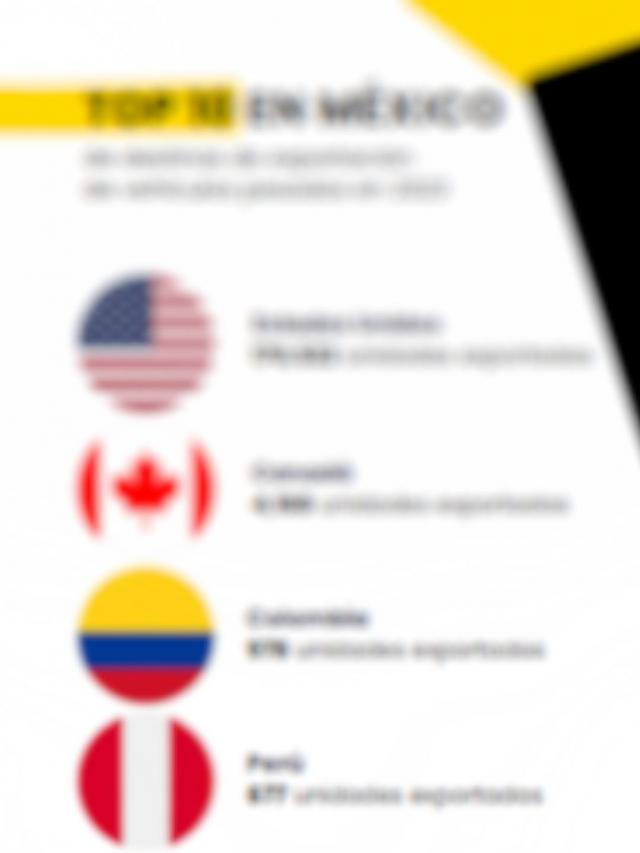
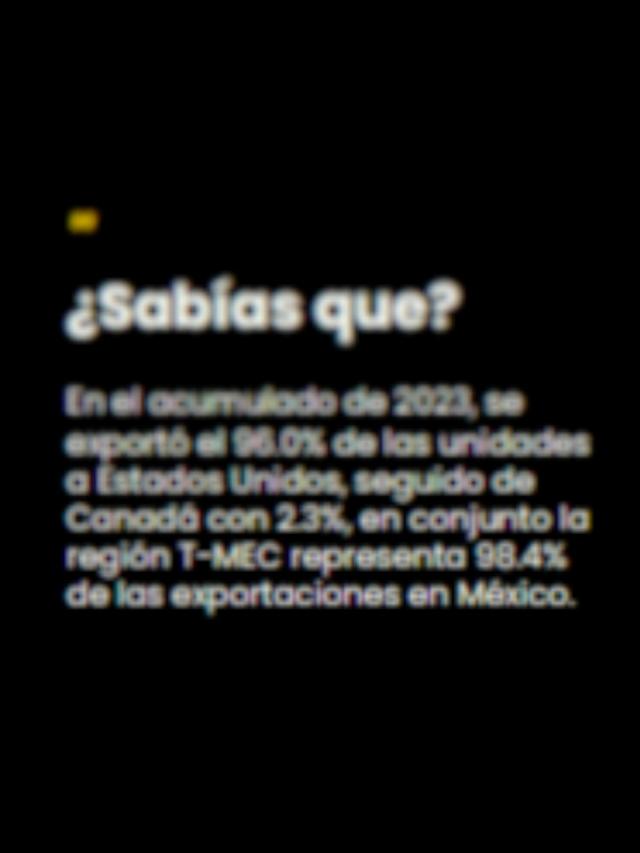
By destination, the United States maintained its importance as the main market for Mexican goods . During October of this year, non-oil exports to that country grew 36.8% year-on-year, while those destined for the rest of the world barely increased by 0.8%.
This concentration is also evident in the structure of foreign trade: during January-October, the United States accounted for 85.18% of Mexico’s non-oil exports . This reflects the productive integration between the two countries, although it also demonstrates the dependence on U.S. demand to sustain the growth of Mexican exports.
In contrast, oil exports totaled $1.738 billion , a year-on-year decrease of 3.4 percent. This decline was accompanied by a reduction in the volume of crude oil exported, which stood at 408,000 barrels per day, compared to the 717,000 barrels per day reported in October 2025.
Imports of inputs accompany manufacturing activity
In the tenth month of 2026, merchandise imports totaled 85 billion 711 million dollars , an annual growth of 30.8 percent.

Intermediate goods —products used as inputs in the production of other goods or services— accounted for the largest value, at $69.916 billion, an annual increase of 38.1 percent.
Meanwhile, imports of capital goods —machinery, tools or equipment— reached 5.512 billion dollars, an annual increase of 9.4%, while those of consumer goods —products or services acquired by final consumers— totaled 10.283 billion dollars, with an increase of 4.3 percent.
The composition of imports also allows us to understand the relationship between imports and productive activity. During the first 10 months of the year, intermediate goods represented 80.6% of the total value of imports, compared to 12.4% for consumer goods and 7% for capital goods.
This behavior suggests that the growth in manufactured exports is accompanied by increased demand for imported inputs. For transportation and logistics companies, this translates into a greater need to move goods to industrial centers and, subsequently, transport finished products to export destinations.
In this sense, the increase in non-automotive exports opens up opportunities for logistics operators, although it also demands storage capacity, transport availability and coordination of supply chains to handle larger volumes of exchange.
Comment and follow us on LinkedIn: @GrupoT21