Road accidents have been categorized as a pandemic by the World Health Organization (WHO) , just as happened with COVID-19 or other situations that have affected the pace of societies.
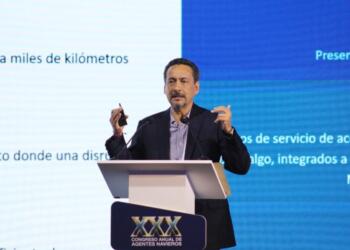
Understanding the reality and with a vision where they should not experience a single accident, much less a human loss, Jugos Del Valle-Santa Clara (JDV-SC) held the 5th edition of the Safety Summit , a space where the objective is to raise awareness among its transport partners and suppliers regarding the challenge that exists in road safety.
“Safety is no longer a trend, it’s a culture,” with this forceful statement Juan Carlos Jaramillo, CEO of JDV-SC, began the sessions, emphasizing that well-defined strategies are needed to promote organizational changes, with the goal of internalizing safety at all levels, including own personnel, operators, and third parties.
In a vision where KPIs have become the roadmap, in terms of safety, success, the main KPI is that the operator and the truck arrive safely at their deliveries, achieving the best levels of productivity .

José Luis Silva, Safety and Environmental Manager of JDV-SC, presented three different realities , with real accidents that touched the sensibilities of the transport partners present, but where the central message was key: elements such as fatigue, distraction and speeding continue to drive accident rates.
For everyone involved in the daily lives of operators, a fundamental axiom is: “a pressured operator is an operator at risk ,” therefore, efforts should focus on reducing pressure.
In addition to the above, work must be done on the best selection and certification of operators (theoretical and practical), promote continuous training where realistic and humane working conditions are presented and, above all, develop a talent retention approach, not just on its availability, summarized Alex Theissen, president of the Board of Directors of the National Association of Private Transportation (ANTP) .
In terms of technology, emphasis was placed on the fact that in addition to proper implementation, adoption is required in all spheres of the organization, which must be accompanied by training to obtain the expected results.
“ Technology doesn’t drive itself, it only helps to drive better , and if poorly implemented, technology can become the operator’s enemy,” highlighted Juan Alberto Báez, CEO of Fletes Hesa .
One consensus was that technologies such as cameras, telemetry, and ADAS systems must have a clear objective: to prevent serious accidents, not just to monitor.
“Technology is designed to reduce the severity of human error, assuming that error will always exist,” said Edgar Chahín, president of Fletes Hesa.
Eugenio Domínguez, Supply Chain Director at JDV-SC, warned about the need for certifications in both theory and practice, as a way to address existing problems and offer solutions.
Meanwhile, Luigi Terzini, Sr. Director of Occupational Safety LATAM OU for Coca-Cola Company , identified a key element in this matter, namely the maintenance of the units, which is associated with accident rates, and which is a matter that can contribute to predictability models .
One of the conclusions of the Safety Summit is that for JDV-SC, the effort to reduce accidents and human losses to zero has the full support of the organization, in identifying actions that help its transport partners and translate into tangible results.
Comment and follow us on LinkedIn: @Didier Ramírez Torres / @GrupoT21