The reform to the Customs Law published last December not only modified articles and operational rules; it introduced a silent redesign of the institutional balance in Mexican foreign trade. Under the guise of strengthening control, traceability, and combating practices such as smuggling and tax evasion, the new regulatory framework has shifted a significant burden onto the customs broker , a figure who, without being an authority or owner of the merchandise, is now at the center of compliance verification.
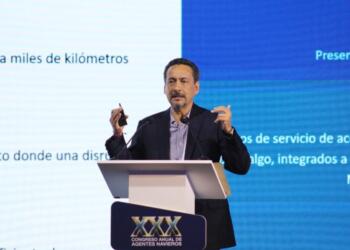
In a virtual conference organized by the Mexican Institute of Executives in Foreign Trade (IMECE) , Nashielly Escobedo, director of the Latin American Confederation of Customs Agents (CLAA) , and Felipe Miguel González Jaimes, customs agent and former president of the CLAA, broke down the scope of this reform, particularly regarding the new role of the customs agent in relation to the authorities involved in foreign trade activities.
The starting point is clear: the reform seeks to strengthen the oversight and control of foreign trade operations. However, the chosen instrument —the expansion of customs broker responsibilities— is generating side effects that are beginning to strain operations.
In practice, the change is structural. “The role I play as a patent holder has indeed changed completely,” González Jaimes noted, describing an environment where the customs broker is no longer limited to customs clearance—in terms of Article 35 of the Customs Law—but now assumes functions that border on the comprehensive verification of the taxpayer (importer or exporter).
The crux of this transformation lies in Article 162, particularly in section VI, which establishes the obligation to “verify” the importer’s or exporter’s compliance with various conditions. This single word redefines the scope of the service. “It involves a vast gulf of responsibility,” warned the customs broker, referring to a concept that doesn’t precisely define the extent of this verification.
In parallel, the General Rules for Foreign Trade (RGCE), specifically rule 1.4.14, detail a file integration scheme that requires customs brokers to validate, from the outset of the business relationship, elements such as the client’s operational capacity, infrastructure, facility location, tax compliance, and the consistency of their operations. In effect, this model reverses the traditional approach. “Today it’s: customs broker, know your importer,” according to Felipe González.
This change has immediate implications. The verification of tax compliance—which includes reviewing the positive opinion of compliance issued by the Tax Administration Service (SAT) —has led to the suspension of operations due to non-compliance, which in many cases is of an administrative nature. “ We have stopped operations from January onward , where unfortunately, for whatever reason, the taxpayer is not up to date with their tax obligations and their opinion is negative,” explained González Jaimes.
The problem is not minor. A negative opinion can stem from omissions as simple as the failure to submit a DIOT (Informative Declaration of Operations with Third Parties), but its impact is immediate: inability to validate customs declarations , logistical delays, increased storage costs, port delays, and disruption in the supply chain.
Moreover, this new filter has begun to be reflected in macroeconomic indicators. “It has even impacted tax revenue ,” stated the customs agent, noting that the inability to operate with non-compliant taxpayers has temporarily reduced the collection of foreign trade taxes.
The data confirms it. Customs revenue in Mexico declined for two consecutive months, totaling 101,568.38 million pesos (mdp) in February 2026 , a real contraction of 16.8% compared to the same month in 2025, according to statistics from the National Customs Agency of Mexico (ANAM) .
In the accumulated period of January-February of this year, the country’s customs offices collected 207,591.29 million pesos , reflecting a drop of 13% compared to the same period last year.
Ultimately, what emerges is an imbalance in the allocation of responsibilities. Escobedo raised a key question: if the goal is to guarantee compliance from the outset, why aren’t these filters strengthened during the registration process for the importers’ registry administered by the SAT (Mexican Tax Administration Service)?
The response from the operation is emphatic: “The entire burden of proof then falls on us ,” acknowledged González Jaimes, explaining that, once the registry is granted, the continuous monitoring of compliance is transferred to the customs agent, who also lacks direct access to the SAT’s tax databases.
This point is critical because it introduces an asymmetry: the customs agent is required to verify information to which he does not have full access, which forces him to depend on external tools – such as pre-validators or private compliance systems – that increase the cost of the operation and do not guarantee absolute certainty.
The complexity is amplified by the incorporation of concepts such as traceability and materiality. Although these terms have been central to tax audits, their incorporation into the customs arena redefines the scope of the agent’s responsibility. “They leave us exposed in terms of our responsibility ,” González Jaimes pointed out, noting that there are no real mechanisms in place to track merchandise once clearance is complete.
In complex operations—such as temporary imports under the IMMEX (Maquiladora and Export Manufacturing Industry) program—traceability involves tracking inputs through multiple production processes, transfers between companies, and final destinations. In practice, this level of control falls to companies’ internal systems and the auditing powers of the authorities, particularly the General Administration of Foreign Trade Audits (AGACE)—part of the SAT (Tax Administration Service)—not to the customs broker.
Adding to this situation is the elimination of the liability exemption for goods that are difficult to identify, contained in Article 54 of the Customs Law. This change, which responds in part to improper practices detected in sectors such as hydrocarbons —like the so-called “huachicol” ( fuel theft)—increases the risk for customs brokers in industries where tariff classification requires specialized technical analysis.
The problem is structural: customs brokers lack certified laboratories and the authority to scientifically validate the nature of certain products. Nevertheless, the responsibility falls on them. The result is already visible: rejected transactions, increased costs , and greater risk aversion in sectors such as chemicals, pharmaceuticals, and energy.
In parallel, the implementation of the new electronic transmission scheme for the declaration of value (MVE) – provided for in article 81 of the Customs Law Regulations and aligned with the use of the Electronic Value Certificate (COVE) – introduces another front of pressure.
Although the declaration of value is not a new concept, its digitization and mandatory nature are transforming operational dynamics. The diagnosis is worrying: “We are not reaching 30% or 40% of companies that submit their declaration of value ,” warned González Jaimes, just days before it was due to come into effect (the authority postponed it until June 1st of this year).
The challenge isn’t just one of adoption, but of fundamental principles . Determining customs value depends on commercial elements—contracts, payment terms, Incoterms, logistics costs, insurance—that are defined between buyer and supplier. The customs broker doesn’t participate in that negotiation. “We actually receive information… we’ll never be able to determine the intentions that one company might have had with another,” he explained.
However, the responsibility for the correct determination of contributions remains. This creates a gap between the information available and the responsibility assumed , especially when errors in the declaration can lead to tax omissions and penalties.
In this new context, formalizing contractual relationships between customs brokers and importers is no longer merely a recommended practice but an operational necessity. Clearly defining obligations, scope, and responsibilities is now critical for mitigating risks.
The emerging scenario is one of a more demanding system, but also one that is more fragile in its daily operations. Administrative overload, a lack of clarity regarding the limits of responsibility, and misalignment among stakeholders are beginning to impact trade facilitation, one of the principles that Mexico has sought to strengthen within the framework of international agreements such as the United States-Mexico-Canada Agreement (USMCA) .
The risk is clear. In an environment where the country seeks to consolidate its position as a strategic platform for nearshoring (relocation of production lines), legal certainty and operational efficiency are key variables. The current equation—more control, but with higher costs and risks—could erode that advantage.
As González Jaimes warned, investors first evaluate conditions such as legal certainty, the functioning of the customs system , and the level of regulation before making decisions. Under this new framework, these variables are beginning to come under pressure.
The reform, in its attempt to close control gaps, thus opens a deeper debate: whether the strengthening of the customs system can be sustained by transferring responsibilities to actors who do not have the tools or powers to fully assume them, or whether it will be necessary to rethink the balance between authority, intermediaries and taxpayers to prevent control from ultimately compromising operations.
Comment and follow us on LinkedIn: @Enrique Duarte Rionda / @GrupoT21