Going into a pharmacy to buy medicine seems like an everyday act. Waiting a few minutes behind the counter, receiving a small box, and going home is part of the routine for millions of people. What almost no one imagines is that, long before it reaches their hands, that medication embarked on a journey where a seemingly imperceptible detail can change everything.
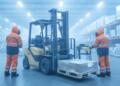
From the moment it leaves the laboratory , it begins a journey in which it will change hands time and again. It will pass through warehouses, distribution centers, and various means of transport before reaching a hospital, a pharmacy, or a patient’s home. Along that route, even a minimal temperature variation can be enough to compromise the effectiveness of a drug developed over years to save or improve a life.
Behind this journey lies an operation that has become increasingly complex . While science develops increasingly specialized biotechnological drugs, cell therapies, and other treatments, logistics faces an equally important challenge: maintaining them within increasingly strict temperature ranges until they reach the patient. Some require temperatures as low as -70 degrees Celsius and even cryogenic conditions, where the slightest deviation can compromise their integrity.
“When we talk about medicines, we often think about research, the laboratory, or their development, but there is a step just as important as all of that: ensuring that during transport they retain their characteristics so that they reach the patient in the conditions in which they were designed,” explained Carlos Humberto Infante y Loya, founder and president of the Board of Directors of Kryotec .


While a patient waits for medication, elsewhere in the line someone spends the morning precisely cutting the materials that will help maintain the temperature of that treatment . Machines work constantly as workers prepare the insulating panels that will later form part of a thermal container. A few meters further on, other hands inspect each piece to ensure it meets specifications before it continues its journey along the production line.
At that same plant, they also manufacture the cold packs that will accompany the medication during its journey , and they produce single-use solutions and reusable cold chain systems, available in capacities ranging from just over a liter to containers of nearly 1,800 liters. Every cut, every check, and every test is part of a process that the patient will likely never know about, but on which the quality, safety, and efficacy of the treatment depend.
For many years, the cold chain focused primarily on preserving products between two and eight degrees Celsius. However, the advent of new therapies completely changed the rules. Today, simply transporting a medication is no longer enough; it is essential to ensure that it retains its properties throughout the entire journey, regardless of the conditions along the way.
“Previously, the cold chain was seen as an operational process. Today it has become a critical infrastructure,” Infante stated.
The importance of this operation is also reflected in its economic impact. According to industry estimates, cold chain failures generate losses of approximately $35 billion annually in the biopharmaceutical industry. In Mexico, these losses are estimated at between $700 million and $1.2 billion each year.
But behind those figures are situations that can happen any day. A delay during transport, improper handling, a route different from the one planned, or a protocol not followed correctly can take a medication out of the temperature range for which it was designed.
“There is a high risk of human error. We are constantly training and reinforcing work instructions because it is a very demanding protocol. It must be followed for the packaging to perform as promised,” the executive stated.
To reduce these risks, the work begins even before the packaging is manufactured. Each solution starts with an analysis of the client’s logistics operation: the medication’s destination, the transit time, the climatic conditions it will face, the mode of transport, and the points where temperature fluctuations might occur. With this information, a system is developed to respond to the actual conditions of each route.
One of the biggest challenges continues to be in the last mile . That is, the final stretch before the medication reaches a hospital, a pharmacy, or directly to the patient. There, where more operational variables come into play and the product changes hands again, maintaining temperature control represents one of the main challenges for the cold chain.
The COVID-19 pandemic tested that capacity. During that period, Kryotec participated in the conditioning and preparation of vaccine shipments that Mexico sent to countries in the Caribbean and Central America, an operation that involved continuous workdays and coordination with authorities and military personnel.
“It was very intense, days and nights of work, but everything turned out well. It’s a great satisfaction,” Infante recalled.
The patient may never question everything that happened before receiving a medication. All they hope is that it works. Behind that expectation lies a chain of people, processes, and decisions whose objective is to ensure that, after traveling hundreds of kilometers and passing through multiple hands, the treatment arrives with the exact same quality, safety, and efficacy it had when it left the laboratory.
Comment and follow us on LinkedIn: @Karina Quintero / @GrupoT21