A stolen container, in practical terms, becomes an empty shelf, with immediate effects on the value chain.
The data confirms the need for this shift. Crime is concentrated in specific corridors (mainly in states like Mexico State, Puebla, and Guanajuato) and on key routes such as Mexico Highway 57 or Mexico Highway 150D, where the probability of incidents remains high.
Furthermore, around 80% of thefts occur in heavy vehicles , which reinforces the urgency of more precise risk management.
Cargo theft follows organized dynamics, with defined patterns in terms of schedules, routes, and methods of operation. The repetition of incidents at the same location (what criminology calls multiple victimization) reveals that criminal groups have already deciphered the logistics operation, identifying vulnerabilities based on information obtained directly from the operators.
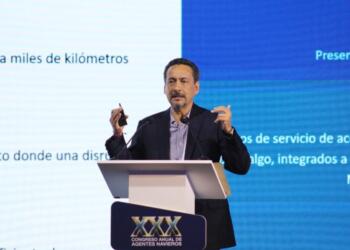
Faced with this scenario, predictive intelligence emerges as a key tool. More than an isolated technological solution, it is a model based on data analytics, geointelligence , and the processing of historical variables that allows us to anticipate risks before they materialize, Villatoro said.
This involves identifying spatial and temporal patterns, as well as transforming data into useful information for decision-making. The value of this approach is also reflected in financial terms .
Investing in prevention doesn’t translate into additional costs, but rather a return on investment by reducing crime and stabilizing operations. Furthermore, adopting predictive models can strengthen negotiating power with insurers by demonstrating greater control over risks.
In practice, this means redefining resource allocation. Instead of deploying end-to-end security schemes , intelligence allows for focusing efforts on high-risk areas and times, optimizing budgets and increasing operational efficiency.
At the operational level, the change is also cultural. Moving from asking “where is the truck?” to questioning “what risks will it face in the coming hours?” makes all the difference in management, Villatoro emphasized.
Early visibility, the use of control towers, and the automation of alerts allow for a reduction in operational workload and enable the team to focus on strategic decision-making.
In this context, security ceases to be a cost center and becomes a competitive differentiator. The ability to anticipate not only protects merchandise but also ensures business continuity in an environment where any disruption can translate into financial losses and a decline in trust.
The transition is already underway. The challenge now is to consolidate models where information is transformed into intelligence and, above all, into action, Villatoro concluded.
Comment and follow us on LinkedIn: @Karina Quintero / @GrupoT21