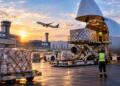




Cargo aviation will maintain a trajectory of sustained expansion over the next two decades. According to Airbus ‘s Global Cargo Market Forecast 2026 , the global fleet of dedicated freighters will grow by 46%, from 2,360 aircraft in 2025 to 3,460 in 2045 , driven by increased international trade, e-commerce , and fleet renewal.
Presented at the Cargo Facts Symposium , the analysis forecasts that 2,670 cargo aircraft will be required over the next 20 years . Of that total, 1,580 aircraft will be used to replace existing aircraft, while 1,090 will meet the growing global demand for air cargo.
The European manufacturer estimated that demand will be distributed among 1,140 single-aisle freighters, 860 medium-wide-body aircraft and 670 large-wide-body freighters, reflecting the needs of different markets and operational profiles.
He indicated that 1,700 cargo planes will be modifications of passenger planes, while 970 will be newly manufactured.
The company projected that global trade will grow at a compound annual rate of 2.9%, while air cargo traffic will advance at a higher rate of 3.2% annually until 2045. This will occur despite an environment marked by high fuel prices, geopolitical tensions, and persistent pressures on supply chains.
“Although air cargo represents less than 1% of the volume of global trade by weight, it carries more than 30% of total trade by value, proving to be a vital mode of transport for goods requiring the fastest routes to market. In the last three years, the value of computers and high-tech products shipped by air has doubled, reaching 15% by 2026. Other factors driving e-commerce and air transport, seen as an alternative to traditional shipping for some products, are also contributing to this growth,” he explained.
Added to this is the continued growth of e-commerce, which continues to favor fast delivery logistics solutions.
Geographically, Asia-Pacific will continue to lead international air cargo traffic , particularly on routes to North America, which will register the highest growth rate at 3.8% annually. Europe will remain the second most important market for these intercontinental operations.

North America will lead the demand for new aircraft with an estimated requirement of 925 freighters, followed by Asia-Pacific with 850. Together, these two regions will account for nearly two-thirds of global demand. Europe and the Commonwealth of Independent States (CIS) will require 515 aircraft, while Latin America will need 165, the Middle East 125, and Africa 90.
Technological upgrades will be another driving force in the market . Airbus has anticipated a gradual retirement of older-generation freighters to make way for more fuel-efficient and emission-reducing aircraft. In this context, models like the A350F and the conversions of the A320, A321, and A330 families will seek to capitalize on an industry that, despite global uncertainty, continues to demonstrate remarkable resilience and long-term expansion prospects.
Comment and follow us on LinkedIn: @GrupoT21