

Fleet management in Mexico is undergoing a transformation marked by the incorporation of electric vehicles, the arrival of new manufacturers to the market, and an international economic environment that forces companies to review their operating costs and vehicle management strategies.
Added to these factors is a greater need to optimize resources, from fuel consumption and unit maintenance to the selection of suitable vehicles for each operation, in a market where companies are beginning to evaluate alternatives to delegate the management of their fleets.
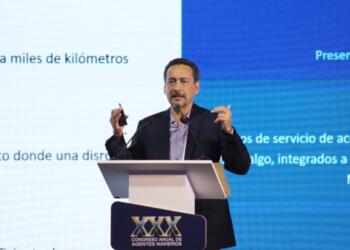
In an interview with T21, Josué Chávez, Acting Managing Director of Holman Mexico , identified three trends that are influencing the behavior of the sector: electrification , the diversification of the vehicle offer , particularly with the entry of Chinese manufacturers, and the reconfiguration of international trade .
On this last point, he explained that tariff discussions and changes in global supply chains also have implications for Mexico, particularly in its positioning as a destination for manufacturing and logistics services.

Given this scenario, he pointed out that one of the main opportunities lies in leveraging operational information to identify areas of efficiency and make better decisions about fleets.
The executive explained that the Mexican market can be divided into three segments: companies that directly manage their vehicles, those that contract external services, and a third group that is still unaware of the available alternatives for managing their units.
From their perspective, there is a trend towards greater adoption of vehicle leasing, accompanied by specialized management and maintenance services.
“More and more customers who manage their own fleet are starting to look for external solutions,” he emphasized.
This evolution is also beginning to be reflected in financial institutions, which traditionally focused on offering leasing, but are now seeking partnerships to incorporate fleet management solutions.
Chávez explained that one of the opportunities lies in companies that maintain their own workshops, due to the costs associated with personnel, facilities and operation, regardless of how frequently their vehicles require maintenance.
In contrast, external management models allow the use of workshop networks and the contracting of services according to the needs of each unit.
According to the executive, this alternative can represent an opportunity to optimize resources, although its suitability depends on the characteristics and requirements of each fleet.
Faced with pressure on operating expenses , Holman has strengthened its focus on data analysis to identify efficiency opportunities among its clients.
Chávez explained that the company recently formed a specialized data analysis team in Mexico , with the purpose of leveraging the information generated during the operation of the units.
The variables considered include routes, vehicle age, fuel consumption, taxes and general administration costs, as well as preventive and corrective maintenance expenses.
This information allows for the creation of reports that help fleet managers evaluate alternatives to improve their operations.
The company also maintains relationships with vehicle manufacturers to analyze performance differences between makes and models, taking into account the specific needs of each customer.
For Chávez, these tools become relevant when it comes to managing fleets with different configurations, which can include cars, vans and trucks, as well as executive and operational vehicles distributed in metropolitan areas or remote regions.
Holman strengthens its presence in Mexico
Amid these changes, Holman seeks to consolidate a new stage of operations in Mexico, after assuming full control in September 2026 of the business that it developed for approximately three decades in partnership with Grupo Zapata .
The company specializes in vehicle fleet management through leasing, maintenance, vehicle registration, and insurance services. Its offerings range from vehicle financing to maintenance management and regulatory compliance, with the goal of facilitating the operation of corporate fleets.
The company’s history dates back to 1924, when it began operations in New Jersey, USA, distributing Ford parts and auto components . It later expanded into vehicle sales and, in the late 1960s, began developing its fleet management business.
Its arrival in the Mexican market occurred in 1995, based on a need for vehicle management services identified by a client in the logistics sector who maintained commercial relations with both organizations.
From that opportunity arose the partnership between Holman and Grupo Zapata, through which the fleet management business was developed in the country.
Now, with the integration of its operations, the company seeks to combine the experience acquired in Mexico with its technological capabilities and international presence.
“We are not a new company in Mexico. We truly see those 30 years we spent together with Grupo Zapata as a very important foundation on which we want to continue building,” he explained.
One of the main elements of their strategy is service, particularly in response to the needs of customers who operate fleets with different types of vehicles and geographical coverage, Chávez indicated.
In that regard, he highlighted the importance of having alliances , service infrastructure, and technological tools that allow responding to the particularities of each operation.
Although he did not provide a figure on the number of units he currently manages in Mexico, he noted that Holman participates in industry associations, including the Mexican Association of Vehicle Leasing Companies (AMAVe) .
Looking ahead, Holman plans to strengthen its integration with operations in the United States and Canada , under a strategy that will allow it to serve customers with a presence in all three countries.
This vision reflects the way companies organize their supply and service chains, which often operate in an integrated manner in North America.
As part of this strategy, he announced that the company is considering investing several million dollars in technology for Mexico, although he did not specify the amount or the implementation schedule.
The resources would be aimed both at standardizing the technological capabilities available in other markets and at developing tools that allow strengthening service to Mexican customers.
Chávez, who joined Holman in September 2024, explained that his leadership approach is based on data analysis to identify the current state of the business, set goals, and evaluate alternatives to achieve them.
For the executive, Holman’s new stage in Mexico represents the continuation of a trajectory built over three decades.
Comment and follow us on LinkedIn: @Karina Quintero / @GrupoT21