An analysis conducted by the Mexican Transportation Institute (IMT) identified that, while micro and small transport fleets reach a fleet utilization level of 75% , large companies reach up to 95 percent.
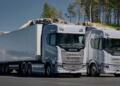
Considering the above, but above all, with the awareness of the commitment assumed with more than 13,000 units in circulation in the country, both cargo and passenger, Scania Mexico presented the ecosystem called “Stronger than yesterday” .
The objective is clear: to increase fleet availability, reduce downtime, decrease time spent in repair shops, and expedite roadside assistance. All of this translates into greater productivity per unit and a more competitive operation for carriers.
“Stronger than yesterday is not just a campaign. It is the result of listening to our customers and fulfilling the promises we have made to them. Today we are better prepared to support them and help their businesses operate more efficiently,” Manuel Aranda, Scania’s Retail Director, explained to T21.

According to Aranda, behind every service, diagnosis or solution there are teams that know the needs of the clients and work to respond to them with greater precision.
Part of Scania’s effort has been focused on generating the necessary capabilities to serve customers, so in the last 24 months they have had a 40% growth in staff , and today they have more than a thousand employees dedicated directly to workshop operations .
The existing capacity is combined with the training strategy. “There isn’t a single technician in our branch, not even the newest ones, who hasn’t received at least one round of training to be able to work at Scania,” Aranda emphasized.
In terms of infrastructure, today with Scania’s network of 18 branches in the country , together with the 50 CWS (Customer Workshop Services) , there is coverage of 80% of the relevant operational territory .

The ecosystem is combined with Scania’s technological capabilities, through the My Scania telematics service, “it is a 100% Scania product and through this information we now know where the customer needs us to be more present, but more importantly, what type of maintenance the customer requires, in what place and depending on what application,” highlighted Manuel Aranda.
One of Scania’s contributions to the industry is its maintenance policies, where nearly 80% of the units in circulation have some type of coverage. Thanks to telematics, it’s possible to identify the plan that a Scania vehicle should have according to the mileage it travels, but above all, to be close to the customers to understand their needs and adapt to their operation.
Data-driven after-sales service
From Aranda’s perspective, the evolution of after-sales service doesn’t depend solely on the contact between people and customers. It also requires listening to what the vehicles themselves are saying through the information they generate.
“We are taking after-sales service to another level. It’s no longer just about having staff and infrastructure, but about understanding how our customers operate, what their units need, and what we can do to ensure they receive proper maintenance and remain available,” he explained.
In the current Mexican market, Scania seeks to solidify its position as a partner for fleet productivity. In this regard, “Stronger than yesterday” represents an evolution of its service capabilities , combining talent, infrastructure, training, connectivity, and maintenance to enhance the competitiveness of carriers.
Comment and follow us on LinkedIn: @GrupoT21