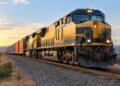
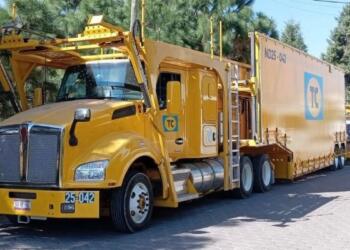
The Mexican Association of Railways (AMF) reported that it is analyzing the federal government’s proposal in the 2027 Economic Package regarding the increase in fees applicable to railway concessions, and reaffirmed its willingness to work with the authorities in building alternatives that will strengthen revenue collection , preserve competitiveness, and maintain the necessary conditions to continue investing in the country’s railway infrastructure.
“For the AMF, it is necessary to implement mechanisms that allow for the gradual improvement of financial and investment planning in a capital-intensive industry that makes a significant contribution to the country’s development,” the organization emphasized.
He explained that greater participation of the railway allows for a reduction in the circulation of heavy vehicles on the roads , particularly in long-distance traffic where it is more efficient, with benefits in road safety and infrastructure conservation.
It also helps to reduce greenhouse gas emissions by up to 80% per ton transported and provides tax certainty regarding the legal consumption of diesel.
He highlighted that the Mexican railway sector has invested more than 16 billion dollars (USD) in the modernization and capacity of the system, including maintenance and rehabilitation of tracks, renewal of locomotives and fleet of specialized cars, terminals and technology.
“This effort has strengthened the system’s capacity and competitiveness, as well as consolidated trust and collaboration with railroads in the United States and Canada, which continue to invest in the Mexican market and in North America’s potential as one of the world’s most dynamic and competitive economic regions. The railroad is a key player in achieving the objectives set forth in the Mexico Plan ,” he emphasized.
The sector’s capital expenditures (CAPEX) are equivalent to approximately 100% of its net profit , reflecting the permanent reinvestment required by the railway infrastructure, he emphasized.
The Mexican freight railway is one of the most internationally competitive in price, with an average of $0.03 per ton-kilometer, comparable to the most competitive systems in America and Europe.
“Freight rail has achieved a 27% share of the land freight market compared to road transport, even without access to diesel at international prices and with additional costs in terms of security and cargo protection, which represent approximately 3% of the sector’s income,” he said.
He recalled that starting in 2019, this sector was stripped of the possibility of crediting the Special Tax on Production and Services ( IEPS) for diesel , which represents an impact equivalent to almost 5% of the sector’s annual income.
It is worth remembering that the increase in the cost of using railways in the country is a proposal included in the 2027 Economic Package, with the purpose, according to the Mexican government, that the update will contribute with greater resources for the development of the sector, guaranteeing a “fair return to the State for the exploitation of a national asset”.
Comment and follow us on LinkedIn: @GrupoT21