Previously, maintaining the cold chain seemed to have a very specific mission: preserving the correct temperature from origin to destination. Today, that’s no longer enough. Fleets need to know the unit’s location, what’s happening inside the cargo box, how many times its doors have been opened, whether the equipment requires maintenance, and even if an alert justifies halting the journey.
The information is there. The challenge now is to use it .
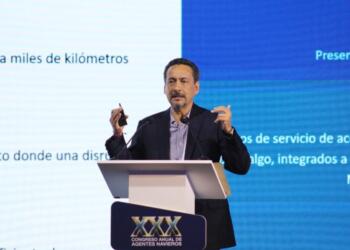
Despite the progress of digitalization in transportation , a gap still exists in leveraging the data generated by equipment. José Carlos Gómez, commercial director of Thermo King Latin America North, estimated that between 15% and 18% of their clients currently use these tools, while one of the main obstacles continues to be resistance to change within companies.
But the decision to digitize operations is no longer solely the responsibility of the fleets. Customers themselves are raising their demands and, in some cases, are requesting temperature tracking of goods from the moment they leave the premises until they reach their destination as part of their receiving and payment processes.

In dry cargo, a delay can mean lost hours and additional costs. In temperature-controlled cargo, it can also mean putting the product at risk. A temperature fluctuation, an unexpected door opening, or a malfunction during transit can compromise goods that must travel hundreds or even thousands of kilometers before reaching the consumer.
In this sense, digitalization allows for monitoring what happens to the merchandise and is also becoming a tool for keeping the truck operational. Available systems allow for tracking location, speed, temperature, and door openings, but also for identifying maintenance needs and determining whether an alarm requires halting operations or can be addressed after the trip is completed.
For Gómez, this is part of the value of using available information to anticipate interventions and avoid unnecessary shutdowns . He also believes that technological infrastructure is no longer the main obstacle to doing so.
Fifteen years ago, he explained, leaving an urban center could mean losing connectivity. Today, he noted, Mexico has better cellular coverage, so the challenge has shifted to within the companies themselves.
An increasingly long cold chain
The challenge will grow as the way perishable products are distributed changes.
Rising temperatures, urban deliveries, and the need to bring goods closer to increasingly specific points of consumption are creating opportunities for smaller vehicles, electrification, and new temperature-controlled solutions. Gómez even predicts that these systems will begin to expand to units such as motorcycles and, eventually, drones.
Thermo King currently offers electric solutions, connected digital equipment and systems supported by solar panels, in addition to traditional diesel technologies that have incorporated improvements focused on reducing consumption.
The company, part of Trane Technologies and with over 90 years of history, focuses on temperature-controlled transportation solutions and operates through a network of distributors. In Latin America, it has over 6,000 units connected to its systems.
Thus, for refrigerated fleets, the next competitive advantage might not only be in adding more units or incorporating new equipment, but in making sure that every kilometer traveled also generates information capable of improving the next one.
Comment and follow us on LinkedIn: @Karina Quintero / @GrupoT21