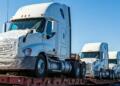
Pressure to reduce emissions in the trucking industry and meet environmental targets is driving interest in technologies with a lower carbon footprint. In this context, Volvo Trucks Mexico announced the arrival of the Volvo FH LNG to the national market, a tractor-trailer powered by liquefied natural gas (LNG) designed for long-haul and regional distribution operations.
The brand indicated that the unit will be available in Mexico starting in May 2026 and seeks to offer an alternative that maintains levels of productivity, autonomy and performance comparable to diesel models.
According to Volvo Trucks , the FH LNG can travel up to 1,200 kilometers on a single refuel, a capacity geared towards long-haul transport operations. Furthermore, the unit can operate on both LNG and bio-LNG, a fuel produced from organic waste.

The company stated that, under certain conditions and using bio-LNG, the vehicle can reduce CO₂ (carbon dioxide) emissions by up to 90% in a “Well to Wheel” measurement . It also explained that the HPDI (High Pressure Direct Injection) technology uses a small amount of diesel for ignition and that, by using HVO as the ignition fuel, the CO₂ reduction could reach up to 100% compared to a conventional diesel truck.
Volvo highlighted that the FH LNG uses an engine based on the D13 powertrain and assured that it offers competitive levels of power, torque, response and efficiency, in addition to maintaining driving and comfort standards similar to those of its diesel units.
The automaker also shared some global results for this technology. It noted that since 2018 it has delivered more than 10,000 gas-powered trucks worldwide and that 2025 was the best sales year for this vehicle line. The United Kingdom currently leads the markets with the highest adoption rates, followed by Germany, Sweden, the Netherlands, Norway, and France.
In the case of Latin America, Volvo considered the region as an emerging market with constantly growing volumes.
The company reiterated that its strategy towards 2050 envisions achieving net-zero emissions through three technological routes: battery electric vehicles, fuel cell electric vehicles, and combustion engines powered by renewable fuels.
Comment and follow us on LinkedIn: @GrupoT21