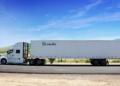
Amid the growing regulatory complexity for trucking between Mexico and the United States , TIP Mexico assured that its fleet of trailers and semi-trailers is already prepared to operate under the legal and technical frameworks of both countries, with the goal of reducing delays and rejections at border crossings.
During the Expo Proveedores del Transporte y Logística 2026 , held at Cintermex in Monterrey, the company specializing in fleet leasing and management stated that its equipment complies with both Mexican Official Standards (NOM) and US regulations, including the Federal Motor Carrier Safety Regulations (FMCSR) and the Federal Motor Vehicle Safety Standards (FMVSS).
According to TIP Mexico, one of the main challenges for Mexican fleets operating to the United States is that compliance with NOMs does not guarantee legal circulation in US territory, so the units must also align with the requirements of the Department of Transportation (DOT) , the Federal Motor Carrier Safety Administration (FMCSA) and the National Highway Traffic Safety Administration (NHTSA).
“Monterrey is the epicenter of logistical dynamism to the north. We want to give absolute certainty to carriers: our units are prepared to comply simultaneously with the legal framework of both countries,” said Eugenio Noriega, Trailer Director of TIP Mexico.
The company presented a regulatory equivalence matrix to explain the requirements faced by carriers in cross-border operations. Among these, it highlighted NOM-035-SCT, related to manufacturing specifications; NOM-068-SCT-2-2014 , focused on physical and mechanical conditions; and NOM-012-SCT regarding weights and dimensions.
According to the company, the FMCSA recognizes NOM-068 as equivalent to the US periodic inspection program for maintenance and operational safety , while in the case of weights and dimensions there is no automatic recognition, so the units must comply with federal and state limits in the United States.
TIP Mexico added that its equipment incorporates approved ABS braking systems , regulatory lighting configurations and perimeter safety components aligned with US standards, in addition to aerodynamic elements to optimize fuel consumption on international routes.
The company also indicated that, through short and long-term pure leasing schemes, it seeks to help Mexican fleets increase operational capacity with equipment certified for safe interchange, particularly during high demand seasons.
Comment and follow us on LinkedIn: @GrupoT21