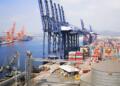
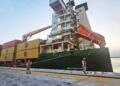
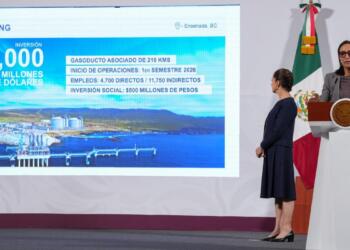
TIJUANA, BC – The Port of Ensenada seeks to reposition itself as a strategic hub for maritime trade in Northwest Mexico amidst a global environment marked by geopolitical uncertainty, pressure on supply chains, and the need to accelerate investments in infrastructure, digitalization, and logistics coordination. This was one of the main conclusions of the panel “Challenges and Opportunities of Maritime and Port Connectivity,” held within the framework of ETYL Cali-Baja 2026 , organized by Grupo T21.
During the meeting, representatives from shipping companies, port terminals, trucking companies, logistics operators, and the port authority agreed that Ensenada’s growth has ceased to be an expectation and has become a reality that is beginning to strain the region’s infrastructure and operational processes.
José Cobos, Sales & Marketing Director of Mediterranean Shipping Company (MSC) , affirmed that the shipping company maintains a long-term commitment to Ensenada despite the volatility generated by the renegotiation of the United States-Mexico-Canada Agreement (USMCA) and the tariff landscape in North America. “MSC is a company that invests in the future, with a perspective extending to the next 10 or 20 years,” he stated, while also highlighting the growth of industries related to technology, semiconductors, and data centers in northwestern Mexico.
The executive noted that Ensenada has also become a relevant alternative for alleviating congestion at other Mexican Pacific ports, particularly Manzanillo and Lázaro Cárdenas . From his perspective, the immediate challenge will be to support the potential growth in demand with greater logistical and maritime capacity. “Mexico is in a strong position despite the current geopolitical situation… in 10 or 15 years this will be a very important region,” he pointed out.
The growth vision was also supported by Ollincuauhtli Méndez, general manager of Hutchison Ports EIT , who noted that the group will celebrate 30 years of operation in Ensenada in 2027 and that it recently completed an expansion of the port terminal . He also announced the arrival of a new container crane this year as part of a strategy that combines infrastructure, automation, and artificial intelligence.
“The focus in operational matters isn’t just on infrastructure, but also on modernizing operations to make them more agile and adapted to the world we live in,” he said. He even detailed that the new cranes operate with remote controls, artificial intelligence, and machine learning tools capable of learning from operations to seek greater efficiencies.
Méndez acknowledged that the pressure on infrastructure is beginning to be felt as the region becomes more attractive to cargo that currently moves via Long Beach or Los Angeles . “We have a lot of room to grow (…) the market is large,” he asserted, noting that the terminal maintains commercial and scouting strategies to attract new volumes.
From the port authority, Fidel Murillo, Operations Manager of the National Port System Administration (Asipona) Ensenada , explained that the port is making progress on projects to expand its maritime and land capacity. Among these, he highlighted the upcoming tender to extend the turning basin from 450 to 550 meters , as well as dredging works financed through the FIDEMAR trust.
The official maintained that the port offers competitive conditions for handling deep-draft vessels and highlighted the recent inauguration of a maritime traffic control center that will provide shipping lines with real-time information on draft, transit times, and operational conditions. “This makes us more efficient, ensuring the fastest and most efficient arrival of ships,” he commented.
Murillo also revealed that Ensenada’s logistics strategy includes projects outside the port area, particularly the development of an inland port in Jatay , about 25 kilometers from the port, where a 1,000-hectare industrial zone is planned. The goal, he explained, is to alleviate pressure on urban operations and expand regional logistics capacity.
However, while investments are progressing, participants acknowledged that the main obstacles continue to be operational coordination and administrative processes. Israel Delgado, CEO of Express Service Transport Inc. , warned that “the highest cost we face is inefficiency,” particularly due to red tape and the coexistence of different regulatory and logistics actors.
The businessman also warned of two growing pressures: the shortage of truck drivers and the problems with land access to the port. “Ensenada is growing significantly, and the infrastructure is being overwhelmed ,” he stated, emphasizing the need to work with local authorities to prevent the last mile from becoming an obstacle to regional growth.
Francisco Espinoza, commercial manager of Internaves de México , focused part of his presentation on the need to standardize logistics processes to serve time-sensitive industries such as IMMEX (the maquiladora and export manufacturing industry) and aerospace. “ Just-in-time is not something to aspire to, but a fundamental element for supply chains,” he stated.
Espinoza warned that some regulatory and customs changes implemented at the national level do not necessarily reflect the operational dynamics of Baja California. “ There are horror stories out there , but the flow of this operation can be streamlined by sitting down together to review our needs,” he said, calling for greater coordination among authorities, terminals, and service providers.
The discussion also addressed the uncertainty generated by trade tensions between Mexico, the United States, and Canada. Although participants acknowledged that the market reacted nervously to the new US tariffs and the USMCA negotiations, an optimistic view prevailed regarding the logistical potential of northwestern Mexico.
“It is very easy to lose trust and very difficult to regain it,” acknowledged Ollincuauhtli Méndez, who considered it essential to avoid regulatory bottlenecks and take advantage of technological modernization to streamline reviews and processes.
In parallel, Asipona Ensenada announced new projects linked to a bonded warehouse for the development of a multi-purpose terminal for general cargo – which is expected to be put out to tender soon – as well as a new cruise terminal and a large-scale tourist marina, initiatives that seek to expand the economic and logistical diversification of the port.
At the close of the panel, the participants agreed that the main challenge for Ensenada will not only be to grow, but to do so in a synchronized way between infrastructure, regulation, connectivity and customer service.
Comment and follow us on LinkedIn: @Enrique Duarte Rionda / @GrupoT21