The shortage of drivers remains one of the main structural challenges for the trucking industry in Mexico , a problem that is not new, but continues to condition the operation and growth of the sector.
This deficit is not only a reflection of an industry perception, but also a documented problem at a global level.
According to the International Road Transport Union (IRU) and the National Chamber of Freight Transport (Canacar) , in Mexico the deficit is around 99,000 operators , a figure that already directly impacts the operational capacity of road transport.
In fact, Canacar has pointed out that this lack of personnel has left more than 90,000 vehicles idle due to a lack of operators , while internationally the situation is replicated on a larger scale, demonstrating that it is a structural challenge and not isolated to the Mexican market.
In this context, companies have had to focus part of their strategies not only on attracting talent, but also on retaining it and making it more efficient. Training has become a key element in reducing turnover, optimizing unit performance, and avoiding corrective maintenance that impacts operating costs.
At the same time, the proper use of vehicles and the technical training of operators are positioned as factors that directly affect the useful life of the units, in an environment where efficiency is increasingly crucial for profitability.
Under this scenario, Isuzu Motors de México is focusing its strategy on supporting its customers—both fleet operators and retailers—in developing operational capabilities. The company has committed to strengthening operator training as a way to address this structural challenge in the sector.
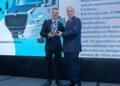
“For several years we have been focused on assisting our clients to provide their operators with the necessary training so that they can maintain and operate the units according to the needs of each vehicle,” José Manuel García Soria, the company’s Fleet Development Manager, explained to T21.
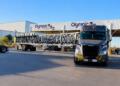
The automaker also highlighted reliability as one of its main differentiators, particularly in its diesel engines, where, according to García, fuel efficiency and durability continue to be key attributes for its customers.
In that context, the firm maintains in its portfolio the range of Euro 6 vehicles , corresponding to the 2026 model year, while advancing in the incorporation of new products, such as its D-Max pickup, which is expected to arrive soon in the Mexican market.
In an environment where operational challenges persist , the combination of technology, efficiency, and human capital is emerging as one of the main routes to sustain the operation of road transport.
In 2025, the Japanese automaker sold 5,910 units at retail, which represented a 10% increase compared to 2024.
Comment and follow us on LinkedIn: @Karina Quintero / @GrupoT21