A yard is not only built with concrete, but with vision. For Mitsubishi Motors de México , the inauguration of its new logistics yard in the port of Lázaro Cárdenas , Michoacán, represents more than a space: it is a concrete response to a saturated, changing and increasingly demanding market, according to Ricardo Hernández, Logistics Director of the brand in Mexico.
Reliability is the word that sums up the process, he said, due to the infrastructure that supports it and the certainty it seeks to deliver to each customer, each distributor, and the team itself.
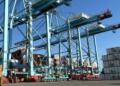
This space strengthens the brand’s logistics infrastructure for the reception and storage of vehicles from Japan, Thailand, and Indonesia arriving at the port of Lázaro Cárdenas.
After years of operating in Mazatlán, Sinaloa, Mitsubishi decided in 2020 to relocate its operations to serve the Michoacán port. The yard covers 42,000 square meters (m²) and is equipped with video surveillance, specialized lighting, access control, and a perimeter fence.
The port’s infrastructure saturation and the proliferation of makeshift yards in precarious conditions led the brand to anticipate the chaos, Hernández explained.

The intention, from the beginning, was not to engage in improvisation, said Hernández, who indicated that Mitsubishi was committed to developing a first-class facility with long-term strategic partners.
That yard is already operating, and with it the promise of reducing vehicle delivery times from up to 12 days to just five to seven days on average.
The key, according to Hernández, is control: of space, protection, and traceability.
“What you don’t move, you don’t sell. We hold the record for having moved 720 vehicles in a single day via rail. Obviously, when you ship by train, the volume is much higher, but of all the shipyards that ship via rail, I believe that, according to the latest data shared with us by the Lázaro Cárdenas National Port System Administration (Asipona) , we have the fastest pace,” he emphasized.
The timing wasn’t accidental. While the domestic automotive market shows signs of stagnation, Mitsubishi is growing.
In June 2025, 116,059 new light vehicles were sold , which represented a 5.9% drop compared to the same month in 2024, according to the report of the Mexican Association of Automobile Dealers (AMDA) .
While Mitsubishi sold more than 25,000 units last fiscal year, it aims to surpass 30,000 this year, half of them L200 models. For Hernández, this growth demands logistics that are up to par : immediate availability, fast response times, and error-free processes.
In addition to the opening of its new logistics yard in San Francisco, Guerrero, the company is already developing a second yard in the Zacatula ejido , in the same state, with an initial area of 50,000 m² that could be expanded to 400,000 m².
The location, the executive explained, was chosen with future expansion in mind and maintaining operational control without depending on port delays.
As for the newly opened yard, the land was raised six meters above the river level to prevent flooding. The last time severe flooding occurred, more than 3,000 units of various brands were submerged, Hernández said.
But the project also fits into a broader vision: achieving zero-emission logistics by 2050. Along the way, Mitsubishi has already moved its spare parts operation from Manzanillo to Lázaro Cárdenas, saving more than 250 kilometers per container on each trip.
Consolidating routes , using fewer vehicles, and partnering with companies exploring alternative powertrains like hydrogen are all part of the plan, he said.
Meanwhile, the focus remains on responding to the customer . Having availability not only of units, but also of solutions.
“I play a lot with that duality of literally switching caps, knowing when I’m a customer and when I’m a supplier, and being empathetic,” Hernández explained.
When speaking about his leadership style , he indicated that he prefers swift decisions, not punishments, and prefers timely resolution rather than delayed reaction. “The only one who doesn’t make mistakes is the one who does nothing,” he noted.
Between closeness and control, between data and calm, Ricardo Hernández forged a leadership style that responds even in the midst of chaos.
This approach, grounded in the ground and focused on the long term, is what sustains Mitsubishi’s logistics growth in Mexico. Because trust, for the brand, isn’t decreed; it’s built, step by step.