The government of Mexican President Claudia Sheinbaum presented its First State of the Union report , in which it highlighted the progress of Plan Mexico , an economic strategy that seeks to transform the country into an industrial and technological powerhouse by relocating companies, strengthening national supply chains, and creating development hubs in various regions.
The roadmap aims to attract $270 billion in private investment, consolidate 15 Economic Development Hubs for Well-being, and generate 300,000 jobs during the six-year term.
Through this strategy, the government also seeks to transform Mexico into the world’s tenth largest economy , with a strengthened industry, employment, and reduced inequality.
One of the pillars of Plan Mexico is the Economic Development Hubs for Well-being, conceived as regional engines of growth. These hubs prioritize investment in strategic sectors such as agribusiness, automotive and electromobility, aerospace, pharmaceuticals, medical devices, chemicals, textiles and footwear, energy, the circular economy, and electronics .
According to the Report, 14 visits were made to federal entities in April and May 2025 to evaluate the feasibility of 24 initial proposals.
Following the inter-institutional review, 14 hubs with the greatest productive and territorial potential were selected on May 22, and the decree on tax incentives and the guidelines establishing the technical and fiscal criteria for their operation were published in the Official Gazette of the Federation (DOF) .
Legal instruments are currently being drafted to formalize the administration and coordination of the hubs, along with state governments and federal agencies.
The strategy also seeks to modernize business technology systems to streamline business formation.
In parallel, intellectual property enforcement was strengthened with 2,548 inspections , the seizure of more than one million pirated products, and the implementation of the “Operation Cleanup” strategy , with seizures equivalent to 885 million pesos (mdp) in illegal merchandise in Mexico City, the State of Mexico, Hidalgo, Nuevo León, Puebla, and the country’s northern border states.
Strengthening supply chains
On the other hand, the Mexican government has prioritized increasing domestic content in exports and local production . Between October 2024 and June 2025, diagnostics were conducted in sectors such as auto parts and semiconductors to identify constraints and propose industrial policy reforms.
Temporary tariffs were also applied to protect the textile industry and import restrictions were imposed under the IMMEX (Manufacturing, Maquiladora and Export Service Industry) program , canceling permits for companies that simulated exports worth 24 billion pesos.
In the automotive sector , Mexico expanded its exports to Argentina, reaching $773 million in the second quarter of 2025, more than double the previous year.
Likewise, micro, small, and medium-sized enterprises (MSMEs) have been a central part of Plan Mexico. Between October 2024 and June 2025, 540.516 billion pesos in financing was provided to 365,256 companies, and 38,071 training courses in business management and operational efficiency were provided.
The Mujer Exporta MX program connected 51 women-owned businesses with international buyers from Germany, Canada, and the United States, promoting inclusion in sectors such as agri-food and textiles.
Infrastructure and international cooperation
To improve productive connectivity, the government highlighted that 4.505 billion pesos were financed for roads and highways , in addition to 14.418 billion pesos for urban transportation such as lines 4, 5, and 6 of the Monterrey metro and Line 4 of the Guadalajara light rail.
In terms of cooperation, Mexico and Germany strengthened the Partnering in Business with Germany program, focused on the automotive and aerospace sectors, with 20 Mexican companies selected by 2025.
The Portfolio for Shared Prosperity recorded, as of June 2025, a total of 1,661 private investment projects totaling US$270,449 million, of which 372 faced 1,061 delayed procedures.
To date, according to the Mexican government, 170 have been resolved to streamline the investment environment.
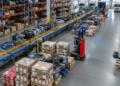
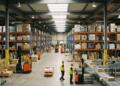
Likewise, growth in the industrial warehouse sector reached 14.5% compared to 2023, with 72 new projects in the first half of 2025, mainly on the northern border and the Bajío automotive corridor, driven by the nearshoring phenomenon.
Comment and follow us on X: @jenna_GH_ / @GrupoT21