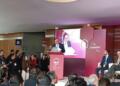
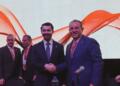
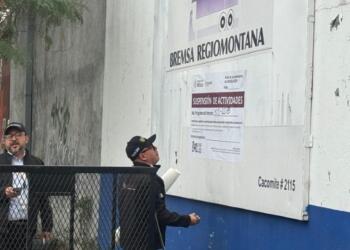
Informality is one of the biggest challenges facing passenger transportation in Mexico. In a country where this practice accounts for around 40% of the sector, the National Chamber of Passenger and Tourism Transportation (Canapat) decided to put the issue on the agenda. Its executive director, Virginia Olalde , considers it an urgent priority and explains: formalization is not only about complying with the law, but also about strengthening trust and competitiveness .
“In 2023, it was estimated that informality in our sector represented around 40 percent. At Canapat, we consider it essential to resume the vehicle reorganization and scrappage programs, accompanied by tax incentives and operational stimuli that promote regularization. A key priority for the Chamber is to reinstate these programs in order to maintain a new, technologically advanced fleet, which will strengthen formalization and offer fairer conditions for operators and users,” he added.
Canapat brings together more than 650 companies and 110 terminals that fully comply with the laws and guidelines of the country.
“Formal businesses provide certainty and a strategic ally for the authorities, to have an orderly and secure public policy,” Olalde emphasized.
From their perspective, formality is not just an operational requirement, but an ethical commitment to the passenger. “Our number one priority is always the user. Giving them the confidence that when they are with a company affiliated with Canapat , it translates into safety and trust during their journey.”
In 2024, the sector transported more than 3.824 billion passengers , exceeding pre-pandemic levels by 2%, Olalde explained. This recovery reflects the industry’s commitment to economic reactivation and safe mobility.
“Passenger transport in Mexico is a fundamental industry for the country’s economic and social development,” he said.
One of the issues that concerns him most is highway safety . “We recognize that there are very significant institutional efforts, with growing collaboration with the National Guard and the Ministry of Infrastructure, Communications and Transportation (SICT) , to reinforce surveillance on federal highways and at terminals, always prioritizing the safety of users and operational personnel,” he explained.
Unequal competition resulting from informality also impacts prices and rates .
“Formal businesses face the challenge of maintaining competitive rates while absorbing increases in diesel, maintenance, and technological upgrades,” Olalde acknowledged.
Even so, the sector continues to focus on ongoing training, operational efficiency and technological renewal , pillars that guarantee a “safe, sustainable and high-quality” service, he said.
In his opinion, the phenomenon of nearshoring (relocation of production lines) represents a great opportunity for the formal transport of personnel.
“At Canapat, we are promoting the idea that transport companies serving these industrial corridors operate within the formal framework and with the highest safety standards,” he commented.
In her new role as executive director, Virginia Olalde seeks to implement a leadership style based on empathy and approachability . She also aims to strengthen ties with both the Chamber’s member companies and the various stakeholders within the passenger transport ecosystem.
“I have a super-talented team here at Canapat, and I am very grateful to be able to rely on them. My hallmark will be approachability, empathy, and creating the necessary alliances to position the Chamber as a relevant player in safe, efficient, and sustainable mobility in our country,” she said.
With a vision focused on collaboration , Olalde seeks to strengthen dialogue with the Canapat delegate network , listen to their needs, and build a strategic framework that allows the organization to project itself into the future, in continuity with a process of innovation and transformation aimed at consolidating safe, efficient, and sustainable mobility .
Olalde is also looking ahead to the next major events that will test the country’s transport capacity.
“The 2026 World Cup will bring a huge economic boost through tourism and passenger transport, both in our country and internationally. We have to be ready to transport all the foreigners and Mexicans who want to travel between the World Cup venues,” he said enthusiastically.
Beyond the challenges of formalization or recovery figures, Olalde represents a generation of leaders who understand mobility as an engine of progress. Her track record speaks for itself: she was recognized by Grupo T21 as one of the 100 Women in Transportation and Logistics , and was also part of the 2021 edition of T21’s 21 Young Leaders .
Consistent with this vision of development and collaboration, Virginia Olalde invited participants to Expo Foro Movilidad , which will take place from March 4th to 6th at Expo Santa Fe , the leading meeting point for the passenger transport and tourism sector in Mexico. Her leadership, based on empathy and approachability , aims to transform mobility through unity and shared commitment.
Comment and follow us on X: @karinaquintero / @GrupoT21