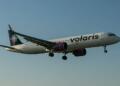
Volaris and Viva (Viva Aerobus) announced an agreement to merge and form the Mexican Airline Group under a holding company structure, with the goal of increasing low-cost air travel and connectivity in Mexico and abroad.
The chairman of the board of this new group would be Roberto Alcántara , current chairman of the board of Viva. In addition, the existing management teams in both companies will remain, including the CEOs, and the board will be composed of 12 directors, six from each company.
Under the terms of the agreement, the shareholders will combine their holding companies through a merger of equals . Viva shareholders will receive newly issued shares from Volaris’s holding company, and Volaris shareholders will retain their existing shares. Each shareholder group will own 50% of Grupo Mexicano de Aerolíneas on a fully diluted basis.
In a statement, they detailed that the new group expects to achieve optimized unit costs with low leverage and better access to lower-cost capital. This also applies to fleet costs, where both companies will continue to pursue sustainable, demand-driven growth.
“Volaris and Viva operate with a high degree of compatibility in fleet, airport infrastructure, technology, reservation systems, suppliers and technical capabilities, generating a substantial potential for synergies,” they said.
The two airlines will maintain their current operations under their separate operating certificates and distinct brands, preserving existing route options for passengers, while further expanding point-to-point travel options.
“We believe that the formation of the new group will allow us to boost the growth of aviation in Mexico, in line with the low-price, point-to-point flight model that has revolutionized our industry over the last two decades,” said Enrique Beltranena, president and CEO of Volaris.
This transaction is expected to generate significant benefits for employees, passengers, society in general, suppliers and shareholders, as well as boost investment, employment, air connectivity, tourism, and economic development in the country.
“The intention is that this transaction will allow both Viva and Volaris to offer lower fares and more point-to-point flights to more cities throughout Mexico and abroad, benefiting not only passengers, but also local economies and communities,” said Juan Carlos Zuazua, CEO of Viva.
In this context, they reiterated that the transaction will result in lower fleet ownership costs, better access to capital, and a stronger financial position . This will allow both airlines to expand their low-cost service offerings, making air travel more accessible to a wider range of passengers, with the aim of broadening their market reach and stimulating demand.
The boards of directors of both airlines unanimously approved the transaction, which is subject to regulatory approvals. It is expected to be completed in 2026. The shares of the holding company will continue to be publicly traded on the Mexican Stock Exchange (BMV) and the New York Stock Exchange (NYSE).
According to the Federal Civil Aviation Agency (AFAC) , Volaris had 143 registered aircraft as of September 30th and Viva had 96 , while Grupo Aeroméxico had 167. However, on their social media, the former celebrated the arrival of its 150th aircraft and the latter its 100th a few weeks ago.
The latest AFAC report detailed that from January to October of this year, Volaris and Viva grew by 5.7% and 7.6%, respectively, in passenger traffic nationwide compared to the same period in 2024, while Grupo Aeroméxico fell by 6.8 percent.

Meanwhile, Viva positioned itself in first place in domestic market share, with 39.5 percent.

Meanwhile, the international market was led by Grupo Aeroméxico, with a year-on-year increase of 2.7%.

Comment and follow us on X: @evandeltoro / @GrupoT21