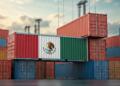
Five years after its entry into force on July 1, 2020, the Treaty between Mexico, the United States and Canada (T-MEC) has consolidated itself as a key axis for the economic integration of the region, despite the commercial tensions and tariff measures of the government of Donald Trump , president of the American Union, highlighted the Mexican Institute for Competitiveness (IMCO) , who also highlighted that the results of the trade agreement in the period reflect a solid and growing relationship between the partners, although challenges remain.
According to the report Five Years After the USMCA: Is North America Still Holding Up? , prepared by the Mexican Trade and Investment Commission (IMCO), between 2019 and 2024, Mexico’s exports to the United States increased by 38 percent, while Canada’s exports to the United States grew by 29 percent . Meanwhile, Mexico’s exports to Mexico and Canada increased by 30 percent and 19 percent, respectively.
During that period, Mexico saw an increase in its exports to the United States in strategic sectors included in Plan Mexico , such as pharmaceuticals, with an 88% increase; chemical products, with a 52% increase; electronics, with a 48% increase; and automotive, with a 35% increase. By 2024, these sectors, along with aerospace and semiconductors, will represent 45% of total Mexican exports to the United States , reaching $274.6 billion, the analysis indicated.
 New rules

Although the economic outlook for the three countries that make up the USMCA has been positive since the launch of this trade agreement, a decisive date is approaching: its first mandatory review scheduled for July 2026 , in accordance with Article 34.7 of the treaty, but before that, no later than October 4, 2025, a process of public consultations will begin among relevant actors within the United States on the operation of the agreement, in order to prepare for next year’s review.
The review will be key to determining the treaty’s future . Member countries will consider whether to extend it for 16 years, until 2042, or opt for annual reviews until its original term expires in 2036.
Among the topics anticipated at the negotiating table are rules of origin in the automotive sector ; labor provisions under the Rapid Response Labor Mechanism (RRM), which has been used 37 times; access to agricultural markets; Mexican energy policy; intellectual property rights; and concerns about Chinese investments in North America, IMCO emphasized.
IMCO’s proposals

In its report, the organization raised several points that could help improve trade relations between the three countries , such as eliminating dumpingpractices ( exporting products at a lower price than they are sold in the domestic market), avoiding the use of sanitary and phytosanitary measures for protectionist purposes, and creating a high-level working group to promote energy security and critical infrastructure.
Regarding Mexico, IMCO suggested initiatives such as the modernization and expansion of 11 ports, strengthening cargo transportation security , and promoting the responsible use of international panels. Therefore, the country must commit to labor legislation, among other factors.
USMCA, an agreement that began with Trump
The USMCA was signed on November 30, 2018, and entered into force on July 1, 2020 , replacing the North American Free Trade Agreement (NAFTA), which had been in force since 1994. The USMCA was the result of a renegotiation process initiated in 2017 by the first Trump administration, in collaboration with the governments of Mexico and Canada. Despite complex and tense negotiations, the three countries reached the new trade agreement .
However, after Trump’s reelection in November 2024, a new era in trade relations between the three countries began. In February 2025, Trump ordered 25% tariffs on Mexico and Canada for failing to “curb drug trafficking and illegal immigration to the United States,” angering trading partners like Canada, which also responded with tariffs against the United States.
Trump also imposed tariffs on strategic products exported by Canada and Mexico to the United States. Last March, he announced a 25% tariff on automobiles and auto parts, and later on steel and aluminum. He is now seeking to impose a 50% tariff on copper, although he has yet to provide further details of this new plan, sparking a global trade war and uncertainty in financial markets.
Comment and follow us on X: @GrupoT21