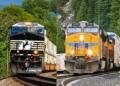
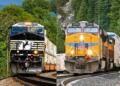
The possible merger between Union Pacific (UP) and Norfolk Southern Corporation (NSC) , announced on August 1, threatens to reshape the North American railroad landscape and open a strategic window for Mexico .
Beyond overcoming a corporate concentration in the United States, which is currently being reviewed by the relevant authorities, one of the benefits of this transaction lies in its implications for the competitiveness of Mexican foreign trade and key sectors such as the automotive, steel, and agricultural industries.
If implemented, UP would not only consolidate its position as the largest ton-mile operator in the United States—even surpassing Canadian Pacific Kansas City (CPKC) , the first trinational railroad—but would also expand its capabilities to more than 51,000 operating miles, representing more than a third of the U.S. rail network.
According to Carlos Barreda Westphal, director of Ferroviaria.mx , “ this acquisition could make UP the main operator , even above CPKC, whose strategy has focused on vertical and cross-border operations between Canada, the United States and Mexico.”
For Mexico, the equation is clear: more infrastructure and fewer interline connections translate into better transit times. Juan Carlos Miranda Hernández, general director of JCM Engineering and Consulting, points out that this merger would streamline interline traffic in the United States, which would directly impact key connection points such as Chicago, St. Louis, and New Orleans, hubs where freight trains to and from Mexico converge.
Comment and follow us on X: @evandeltoro / @GrupoT21