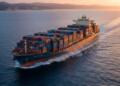
Faced with adjustments due to geopolitical and structural pressures, the United Nations Conference on Trade and Development (UNCTAD) warned of the stagnation of global trade and maritime transport resulting from the tariff policy promoted by the United States.
“Political tensions, new tariffs, changing trade patterns, and the reconfiguration of maritime routes are reshaping the geography of maritime trade,” the organization stated.
According to its report, Shipping in Review 2025: Staying the Course in Troubled Waters , released Wednesday, global seaborne trade grew by 2.2% in volumes and 5.9% in ton-miles in 2024, but is forecast to slow by 0.5% in 2025 , “before averaging 2% annually over the period 2026-2030.”
He detailed that maritime energy trade patterns showed a shift, with coal increasing, oil remaining stable with longer routes, and gas also registering an increase.
The report highlighted that trade in critical minerals is expanding, creating opportunities, but also risks. “These developments are transforming maritime trade and placing new demands on transport and logistics .”
According to the agency’s analysis, there were route changes due to various situations, such as the Red Sea crisis in 2024, which caused an increase in freight rates . Added to this were geopolitical tensions this year, such as the disruption of maritime activity in the Strait of Hormuz .
“The Strait of Hormuz, through which 11% of global trade and a third of seaborne oil trade flow, also faces disruption risks. The diversion to longer routes will increase carbon emissions from shipping in 2024,” he explained.
UNCTAD noted that new tariffs in the United States and other countries have added complexity. For developing economies , the rerouting could create transshipment opportunities at some ports, but would also increase maritime transport costs.
Regarding fleet renewal , he indicated that safe vessel recycling, global standards on greenhouse gas emissions control, and a skilled workforce are key to a timely and just transition to low- carbon shipping .
In the face of geopolitical and trade disruptions, he considered that freight rate volatility has become the new normal.
“Container, bulk, and tanker freight rates have remained high and volatile in 2024 and 2025, with sharp fluctuations amid geopolitical tensions, shifts in trade policies, and supply-demand imbalances. This instability is increasing global trade costs,” he emphasized.
Vessel diversions have lengthened voyages, reduced effective capacity, and raised operating costs, impacting container shipping , with spot and charter rates nearing their COVID-19 pandemic peaks in mid-2024 before declining, “but still well above pre-crisis levels. Volatility has continued into 2025 amid new tariffs and the risk of disruptions in the Strait of Hormuz.”
 The report warned that ports are under increased pressure as vessel diversions and rescheduling of ports of call disrupt schedules.
“Between December 2023 and March 2024, average port waiting times increased by 23%, to 6.4 hours in developed economies, and by 7%, to 10.9 hours, in developing economies,” he added.
In this regard, he indicated that it is urgent to improve port performance, as well as adapt the infrastructure and services of these facilities to the impacts of climate change and modernize them for the energy transition.
Faced with an adverse environment, UNCTAD proposed various actions to improve maritime transport. In this regard, it considered that we must move toward a sustainable, resilient, and digitalized future .
He suggested leveraging maritime transport and logistics for equitable integration and transformation , promoting fleet modernization and sustainable maritime trade practices, implementing regulatory measures to reduce greenhouse gas emissions, as well as utilizing digital solutions and strengthening the regulatory framework to address cyber risks, among others.
Comment and follow us on X: @GrupoT21