Given the trade uncertainty caused by the United States’ tariff policies and the upcoming review of the United States-Mexico-Canada Agreement (USMCA), the Central Zone Automotive Cluster (CLAUZ) is committed to strengthening the regional capabilities of the automotive sector in Puebla and Tlaxcala . Furthermore, it seeks to promote infrastructure development and human capital development as a strategy to attract new investments.
Regarding the USMCA, one of the cluster’s main objectives is to position the region as a reliable partner , especially in the auto parts sector, said Mónica Doger, general director of CLAUZ, in an interview with T21.
“The most important thing is to strengthen local and regional capacities. To help companies understand the scope of the USMCA and align efforts in public policy and investment to consolidate the region as a reliable partner, especially in auto parts,” he said.
Doger emphasized that the main concerns surrounding the USMCA negotiations center on the tightening of rules of origin, environmental regulations, customs procedures, and labor compliance . In this last area, Mexico’s automotive industry is among the best prepared, and the cluster is responsible for keeping it up-to-date.
Regarding rules of origin, he suggested strengthening the supplier base, especially in Tier 2 and Tier 3, since they are required to comply with international certifications and standards.
“We need to create, together with the federal and state governments, a program to develop local suppliers that will allow them to comply with the new rules of origin,” he emphasized.

Puebla aims to recover investments
Following the report by the National Chamber of the Transformation Industry (Canacintra) Puebla on a 62% drop in foreign investment in the state, Doger pointed out that this situation is not recent, but a trend that has been maintained for years, which motivated the cluster to take some actions , such as carrying out a specialized study to attract new capital for the automotive sector.
The director indicated that the study was funded by the local business sector and identifies key needs for Puebla and Tlaxcala to become more competitive. This analysis was delivered to the governments of both states and outlines a precise roadmap for attracting investment focused on import substitution and developing local capabilities .
“We have an industry with more than 60 years of experience, internationally certified auto parts companies and highly trained talent, but we need better conditions to be more attractive,” Doger said.
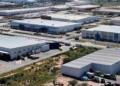
One of the most significant findings of the study was the need to strengthen industrial parks . In this regard, it was noted that although Puebla has an Economic Development Hub for Well-being, it competes with states that have up to 80 industrial parks and 20 more under construction, many of them meeting high standards. Therefore, it was considered that without a solid industrial strategy, attracting significant investments will be difficult .
The specialist specified that the human talent available in the region must be improved, and reported that in collaboration with the Inter-American Development Bank (IDB) , CLAUZ developed a training strategy that includes 107 training packages in the form of micro-credentials , which are designed to prepare local talent for the challenges of automation, Artificial Intelligence (AI), electric vehicles and the Internet of Things (IoT).
“It’s not about inventing new careers, but about filling the knowledge gaps that exist today so that our staff can be more competitive,” he stressed.
Puebla generated a production value of auto parts of three thousand 869.5 million dollars in the first half of 2025 , which placed the state in seventh place in value generated, according to data from the National Auto Parts Industry (INA) .
Comment and follow us on X: @miroslavacs / @GrupoT21