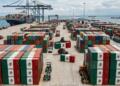
In 2025, Terminal Marítima Mazatlán (TMAZ) operated in an environment marked by tariff threats, logistical volatility, and an automotive industry under pressure from costs. However, the terminal—part of Hanseatic Global Terminals , the port arm of Hapag-Lloyd —closed the year with an atypical result in the face of the adverse climate: growth . “Despite all the uncertainty and volatility, we at the Port of Mazatlán have been resilient,” stated Mauricio Ortiz, CEO of TMAZ, in an interview, predicting a year-end result that would exceed the total volume handled in 2024 by between 8% and 10%.
The increased activity in the automotive sector is due to a current situation: the race to bring forward imports before Mexico imposes tariffs on Chinese cars . “Imports of 2026 models were brought forward in larger quantities,” explains Ortiz. At the time of this writing, the Chamber of Deputies was preparing to vote on the initiative from Claudia Sheinbaum’s government that imposes tariffs on economies with which Mexico does not have trade agreements, such as China and other Asian nations, where an adjustment to export volumes is already anticipated in the near future. Mexican ports will be the first to feel the effects.

Meanwhile, Mazatlán and Lázaro Cárdenas experienced a surge in new car imports from Asia in December, putting pressure on yards, bonded warehouses, and the coordination of rail and car carrier services. Even so, Mazatlán managed the demand thanks to an ecosystem of external yards that has grown in recent years in both size and capacity, allowing it to absorb peak demand without compromising operations. This infrastructure has facilitated the arrival of new ships and increased vehicle turnover. From January to October 2025, the Sinaloa port handled a total of 135,142 vehicles , 7.2% less than in the same period of 2024, according to the most recent official statistics at the time of publication.
STRATEGY: MODERNIZATION
2025 was also marked by an investment strategy focused not only on growth but also on modernization. TMAZ renewed its fleet of tractor-trailer trucks, reach stackers , forklifts, and platforms, in addition to incorporating automated spreaders for 20, 40, and 53-foot containers . This infrastructure was key to consolidating one of the year’s most significant projects: the TMAZ- Ferromex – Baja Ferries intermodal service . Since February 2025, 53-foot containers have been arriving by rail as coastal cargo, unloaded at the terminal, and shipped to Baja California Sur—a service that strengthens regional connectivity and opens new avenues for efficiency for customers.
Comment and follow us on X: @EnriqueDuRio / @GrupoT2