From 2019 to 2025, intermodal transport in Mexico has registered an annual growth of 2.5%, even above the economy, although the challenge is to offer more routes to develop cross border , intra-Mexico and maritime transport .
Humberto Vargas, Chief Commercial Officer of Crossdock , said that security is one of the challenges of intermodal transport, and although the rates are lower, the incidents that occur must be addressed.
During Container Week , organized by the Mexican Intermodal Transport Association (AMTI) , it was revealed that the average annual growth for cross-border transport during this period is 5.1%, while maritime transport is 0.1%, and intra-Mexico transport is 28.5%.
“The 2.5% annual growth speaks volumes about the trust and solutions that users find in intermodal transport. This is something that has been worked on for the last 25 years to achieve, and it demonstrates the confidence that the logistics industry has in the solutions that railways offer,” he noted.
The specialist indicated that the industry’s participation in the maritime sector is 12% compared to 88% for road transport, in cross-border transport it is 6% compared to 94% for land transport, and in intra-Mexico transport it is 1.6% compared to 98.4%.
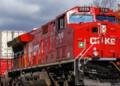
“The challenge for maritime intermodal transport lies in customs processes and the capacity of port and inland terminals. In cross-border transport, we see investments primarily from North American companies to consolidate this service offering, such as Hub Group with EASO and Matson. We see increased interest in developing it. The challenge is to facilitate the service. Intra-Mexico is a product that is in full development; we are hearing from Ferromex about new routes and more containers. Canadian Pacific Kansas City (CPKC) is already making efforts on the Mexico City-Monterrey-Nuevo Laredo route. We will see more,” he explained.
Hoshi Jurado, AVP Intermodal of Grupo México Transportes (GMXT) , highlighted that the railway company is analyzing how to promote intermodal transport from the ports and make the process easier. He also indicated that they are increasing their network for this mode of transport .
“The various intermodal terminals connect with almost all the strategic points of the country. Furthermore, in terms of sustainability, intermodal transport is one of the solutions, reducing emissions by 71%,” he stated.
For her part, Adriana Covarrubias, Senior Sales Manager for Intermodal Mexico at CPKC de México , pointed out that moving cargo by rail helps reduce road congestion and is an “efficient, agile, safe and environmentally responsible way to transport cargo.”
Humberto Vargas, who was also president of AMTI, considered that to have a greater boost in this form of transport it is necessary to approach the port community and understand the solutions that the railways offer, as well as the expansion to new markets, longer customs hours, standardization of operations, among others.
Meanwhile, Nashielly Escobedo, general director of the Latin American Confederation of Customs Agents (CLAA) , commented that the new Customs Law establishes challenges for all participants in the foreign trade supply chain.
“We have little time to implement the controls stipulated by law to prevent disruptions to cargo flow. Many of these controls, instead of helping us become more efficient, will reduce our competitiveness, but we must do our part to avoid negative impacts,” he emphasized.
He explained that with the proposed changes to domestic transit, customs brokers are expected to have to inspect merchandise at the point of entry for clearance purposes, which will impact the flow of goods. “This is quite concerning; it’s established in the new law that comes into effect on January 1st,” he noted.
Comment and follow us on X: @evandeltoro / @GrupoT21