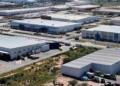
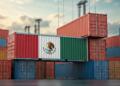
The Mexican government called on the maquiladora industry to increase investment to over 25% of Gross Domestic Product (GDP) next year, as well as to defend the sector during the upcoming revision of the United States-Mexico-Canada Agreement (USMCA).
“We’re already two months away from 2026, and it’s time to invest in Mexico. It’s time to expand investments, grow workforces, and commit to job creation and value creation in the country,” said Altagracia Gómez, head of the Advisory Council on Regional Economic Development and Relocation (CADERR), the government’s liaison office with industry in Mexico.
During his participation in the 50th National Index Convention of the National Council of the Maquiladora and Export Manufacturing Industry (National Index) , he announced that they are working on a proposal to reduce investment times from 2.5 years to one year, cutting federal permits in half, through reform of bureaucratic procedures.
Meanwhile, at the financial level, Nafin and Bancomext are analyzing new plans to promote projects in industrial parks, as well as for sectors included in the Mexico Plan, with preferential conditions regarding terms, guarantees, and rates, to name a few. This is because the goal is for at least 30% of small and medium-sized enterprises (SMEs) to have access to credit.
“All of these efforts, from secondary laws on energy, infrastructure, and talent issues, and particularly aligning industrial policy, IMMEX Chapter 98, with the country’s trade policy, understood through WTO rules, free trade agreements, Mexican official standards, and tariff policy, are issues we need your help with. We want to continue working with you going forward,” he said.
Likewise, he requested that he be present during the USMCA review for technical opinions and to defend national interests.
“Not only the country’s sovereignty, but also the prosperity of the North American region. Mexico is part of the most prosperous region in the world, actively contributing not only to investment and the creation of well-paid jobs, but also to the supply and resilience of value chains, which are the most important in the world. We are already first in heavy vehicles, fourth in auto parts, fifth in light vehicles, ninth in aerospace, fourth in electrical devices, and first in 16 agri-food products, and this is a position we not only want to preserve but also grow,” he noted.
Therefore, he mentioned that despite the “waves” generated by the negotiations, “we also know that we are surfing champions , and in Mexico, companies do not give up, they do not back down, and they continue to invest in a country that will not let them down.”
He also noted that the shoe, textile, toy, and furniture sectors must reach 50% of national consumption, as it currently stands at approximately 37%, and that an import substitution strategy is being sought.
As well as achieving 15% of the added value of global supply chains for the automotive, chemical, pharmaceutical, and information technology industries, among others.
Alfonso Durazo, governor of Sonora, emphasized that the reconfiguration and readjustment of the global economy presents risks, but also opportunities , “because despite the uncertainty surrounding the rules of the international trade game, we can say there is a consensus: North America is stronger and more competitive with Mexico than without it.”
In this regard, he affirmed that the country is a reliable ally for the United States and Canada and maintained that the Mexican government maintains constant dialogue with the business sector to “bring to a successful conclusion” the revision of the USMCA.
Comment and follow us on X: @evandeltoro / @GrupoT21