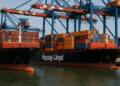
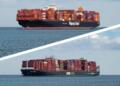
Hapag-Lloyd and Shell have signed a multi-year agreement for the supply of liquefied biomethane (Bio-LNG) , effective immediately, with the aim of accelerating decarbonization in the logistics value chain. The agreement builds on a partnership established in 2023.
“This agreement ensures certainty of supply and allows us to expand the use of renewable, waste-based fuels without compromising the quality and reliability our customers expect. Leadership in shipping means acting today, not waiting for future solutions,” said Jan Christensen, Senior Director of Global Fuel Procurement at Hapag-Lloyd AG.
Liquefied biomethane, derived from organic waste such as crops, manure, and food, enables a seamless transition to clean energy without the need to modify the equipment of Hapag-Lloyd’s LNG vessels , one of the world’s leading liner shipping companies.
The use of liquefied biomethane is part of the company’s strategy to achieve net-zero fleet operations by 2045 .
For its part, Shell, since 2024, has expanded its supply network to include liquefied biomethane at 22 locations around the world , facilitating access to this renewable fuel for global operators.
This infrastructure allows biomethane to be injected into local networks, liquefied, and distributed under a balanced-mass model, optimizing its availability without disrupting existing logistics.
“Bio-LNG is no longer a concept: it’s here, driving the next chapter in shipping decarbonization. Long-term agreements like this build the confidence needed to scale renewable fuels,” emphasized Dexter Belmar, Shell’s global vice president of Downstream LNG.
Liquefied biomethane represents an affordable solution for reducing shipping emissions . Its production is certified under the ISCC EU standard, ensuring raw material traceability, process sustainability, and verification of emissions reductions throughout the fuel’s lifecycle.