Twenty-two days after the explosion of an LP gas pipeline on the La Concordia bridge in the Iztapalapa borough, which left 31 people dead, the head of the Ministry of Energy (Sener) , Luz Elena González, announced two new official emergency regulations that will reinforce the regulation of the transportation and distribution of LP gas in Mexico , which will be published in the Official Gazette of the Federation (DOF) on October 3.
These regulations are the result of coordinated efforts between Sener, the National Energy Commission (CNE) , the Agency for Safety, Energy and Environment (ASEA) , and the Ministry of Infrastructure, Communications and Transportation (SICT) . Their main objective is to raise industrial and operational safety standards in the handling of LP gas , in order to reduce risks to the population and the environment.
The new standards are NOM-EM-006-ASEA-2025, which will regulate the transportation of LP gas, and NOM-EM-007-ASEA-2025, which will regulate distribution . Both will be mandatory for all units dedicated to the transportation and distribution of this fuel.
Main obligations for hazardous material transport units
At this Thursday’s morning press conference, Luz Elena González detailed the new obligations that complement current regulations. These measures seek to ensure the safe operation of units and consider factors such as speed, mechanical condition, and operating conditions, key aspects of industrial safety.
- Mandatory and verifiable maintenance: Units must submit to ASEA a report certifying compliance with the annual vehicle maintenance program, a requirement not contemplated in NOM-007-SESH-2010.
- Rigorous container testing: Proof of internal visual inspections will be required, in addition to the external inspections already required, safety tests, and periodic hydrostatic pressure tests on containers.
- Driver Certification: Operators must have specific training in industrial driving and safety, accredited by a specific competency standard.
- Speed control and monitoring: Vehicles must incorporate speed control devices and GPS tracking systems to transmit information in accordance with CNE regulations. These elements were not included in the previous regulations.
The federal official also noted that companies must adhere to the implementation deadlines. Transportation units will have a four-month period from the regulations’ entry into force . As for distribution units, those with a capacity greater than 5,000 liters and 10 years or older must comply within four months, while the remaining units will have six months to adapt .
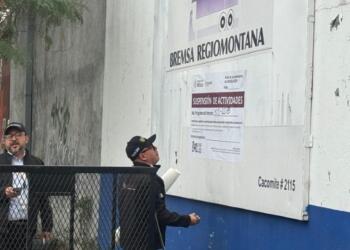
In addition, a joint inspection program will be implemented by the SICT, the CNE, and the ASEA, focused on verifying the condition of LP gas distribution plants . The inspections will include the physical and mechanical condition of the units, the integrity of the safety elements in the containers, the validity of permits, as well as the consistency of vehicle registration and evidence of compliance with regulatory obligations.
On September 30, the Mexico City government issued guidelines for the transportation of hazardous materials. Among the most significant measures was a ban on vehicles carrying more than 40,000 liters of toxic materials or hydrocarbons in the country’s capital.
Comment and follow us on X: @GrupoT21