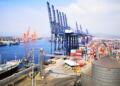
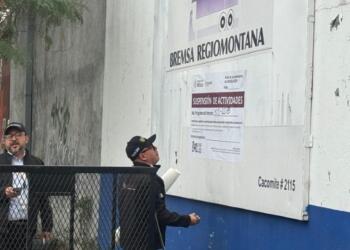
The Ministry of Environment and Natural Resources (Semarnat) , through the General Directorate of Environmental Impact and Risk (DGIRA), determined to formally end the environmental impact assessment procedure of the project “Development of the New Manzanillo Port, in the Basin II of the Cuyutlán Lagoon” , promoted by the National Port System Administration (Asipona) Manzanillo .
Through Official Letter SRA/DGIRA/DG-10367-25 , dated December 17, 2025, the environmental authority resolved to “finalize the Environmental Impact Assessment Procedure and order its filing as a concluded matter,” considering it materially impossible to continue with the evaluation of the project under the current file (code 06CL2025V0012).
The resolution does not imply a suspension or an administrative prevention: it is a formal termination of the procedure, which legally extinguishes the ongoing environmental process and eliminates the possibility that the project will continue its evaluation under the environmental impact statement (MIA-R) originally submitted.
In practical terms, the DGIRA’s decision compels Asipona Manzanillo to completely restart the environmental process if it intends to continue developing the new port. The resolution itself stipulates that any modification or reconfiguration of the project must be processed through a new Environmental Impact Statement in the regional modality, with a new file, new technical studies, a new public consultation, and a new comprehensive evaluation.
A project that ceases to exist administratively
The document is clear in its institutional scope: the Puerto Nuevo Manzanillo project, as it was presented in the procedure initiated in August 2025, ceases to exist from an administrative and environmental standpoint. This is not a technical correction or an engineering adjustment, but rather the complete invalidation of the evaluation process .
The DGIRA concludes that the “alternative” presented by the promoter – a reconfiguration of the port design to reduce the impact on the mangrove and avoid direct intervention on the Cocodrilo I and II islands – actually constitutes a new project , with environmental impacts different from those originally evaluated.
Among the elements that support this determination are the modification of docks, dredging, terminal platforms, navigation routes and the hydrodynamic interaction of Basin II with the other basins of the Cuyutlán lagoon system (I, III and IV), which generates cumulative and synergistic impacts not considered in the initial MIA-R.
The environmental authority points out that this reconfiguration involves the occupation of new areas , the alteration of hydrological flows and sediment transport, as well as the need for new specialized technical studies, including hydrodynamic modeling, sediment balances, flora and fauna inventories, and regional impact analysis.
The mangrove as a turning point
One of the central points of the resolution is the impact on the mangrove ecosystem. The DGIRA concludes that, even with the alternative presented, the project still involves the removal and alteration of mangroves , an ecosystem subject to strict regulatory protection.
Furthermore, the document warns that the port operation would modify the physicochemical conditions of the water , generating a progressive deterioration of the habitat, with additional loss of mangroves, affecting associated species and weakening the ecological functionality of the lagoon system in the long term.
The resolution also identifies risks of contaminant dispersal towards basins III and IV of the Cuyutlán Lagoon, areas linked to the proposed creation of a Protected Natural Area, with possible impacts on fishing, resident and migratory birds, regional biodiversity and salt production.
From strategic project to restartable project
From an institutional perspective, Semarnat’s decision transforms the status of the New Manzanillo Port: it ceases to be a project under evaluation and becomes a project that can be restarted .
This implies that any attempt at development must be rebuilt from the zero phase of environmental planning, with new technical bases, new studies, new social consultations and a new comprehensive assessment of impacts, in an environment where the ecological component acquires a determining weight.
Strategically, the resolution reshapes the horizon for port expansion in Manzanillo . The new port ceases to be a short- or medium-term project and shifts towards a long-term planning approach, subject to complex processes of environmental assessment, territorial governance, and social legitimacy.
Beyond the administrative record, the document reflects a structural shift in the relationship between port expansion and environmental boundaries. The development of new logistics infrastructure in ecologically sensitive areas is no longer solely governed by technical engineering criteria and operational capacity, but also by an institutional framework that prioritizes ecosystem integrity , public participation, and cumulative regional impacts.
The New Manzanillo Port project was not rejected in terms of future viability, but it was legally deactivated in its current configuration. From this point forward, any new attempt must be built under a completely different approach: not as a port expansion, but as a new project that is environmentally, territorially, and socially validated from its inception.
A multi-year project
The project for a new port in Cuyutlán is neither a recent nor a circumstantial idea: it is an initiative that has endured decades of failed attempts, technical redesigns, and planning adjustments without ever coming to fruition . However, it was during the administration of Mayor Claudia Sheinbaum that this proposal received more direct and structured institutional attention, to the point that, within the strategic plan, it was projected that at least one container terminal could be operational in the area before 2030.
Despite this, the constant factor preventing its realization has always been the same: environmental viability . The ecological complexity of the Cuyutlán lagoon system, the presence of mangroves, the hydrodynamic fragility of the ecosystem, and the cumulative regional impacts have transformed the environmental component not into an administrative obstacle, but into the true structural limitation of the project.
In one of his last public appearances as general director of Asipona Manzanillo, Admiral Guillermo Mejía George had announced that by October 2025, letters of interest had been received from the 13 most important shipping companies and terminals worldwide to participate in the future tenders for the Cuyutlán project.
“The next terminal will be put out to tender in July 2026 (…) and the first terminal will be operational in 2028-2029 ,” Mejía George announced during his participation in the XXIX Annual Congress of Shipping Agents, organized by the Mexican Association of Shipping Agents (Amanac) .
The new port facility planned by Claudia Sheinbaum’s administration, located about 30 kilometers from the current port, would cover approximately 1,880 hectares, an area four times larger than the current port of Manzanillo . It would specialize in containers and hydrocarbons, but would also include a support dock for inter-port transfers. Its depth of -18 meters would allow it to receive deep-draft vessels, while the terminals would have docks ranging from 1,176 to 2,000 meters in length, and surface areas ranging from 49 to 104 hectares.

The plan envisioned five highly technological container terminals , with yards and docks designed for progressive automation and comprehensive rail connectivity.
In its strategic conception, the project for the new port in Cuyutlán not only responded to a logic of expansion, but also to an operational need of the national port system: to serve as a relief valve for the current port of Manzanillo , which in recent years has operated recurrently under conditions of saturation.
The pressure on its infrastructure is not insignificant: Manzanillo closed 2025 handling 3,893,357 twenty-foot containers (TEUs), with only a slight decrease of 0.8% compared to 2024 , according to official statistics, which confirms that, even in scenarios of marginal stagnation, the levels of operation remain structurally high.
In that context, Cuyutlán was emerging as a key element for redistributing flows, alleviating bottlenecks, and reconfiguring the region’s logistical capacity. However, the Semarnat resolution makes it clear that port expansion can no longer be considered solely as a response to operational saturation: the environmental variable has become the structural factor that defines the real limits of port growth, even in the country’s main logistics hubs .
Comment and follow us on X: @EnriqueDuRio / @GrupoT21