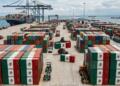
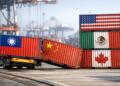
Geopolitical tensions, changes in supply chains, and increasing pressure from fragmentation in the world, among other factors, could cause a slowdown in global trade during 2026 , which will affect developing economies the most, projected the United Nations Conference on Trade and Development (UNCTAD) .
According to the latest World Trade Update (January 2026) , the United Nations agency highlighted the trends that will prevail in the global exchange of goods this year.
In that regard, he estimated that global economic and trade growth will remain moderate, at around 2.6% in 2026 , while growth in developing economies, excluding China, will slow to around 4.2%. This will hit developing countries hard, which will be constrained by the slowdown in infrastructure investment and industrialization. “Stronger regional trade and diversification will be crucial to building resilience.”
“Preserving special and differential treatment remains fundamental to boosting industrialization and food security. Decisions on agriculture, digital trade, and climate-related measures will determine whether global rules support development,” he emphasized.
The analysis revealed that increased protectionism can generate more political uncertainty . Global tariffs increased in 2025, driven primarily by measures implemented by the United States, with the manufacturing sector being the most affected. Governments are expected to continue using tariffs in 2026 to achieve industrial and strategic objectives . The report noted that smaller and less diversified economies will be the most exposed to rising costs and trade volatility.

Another trend identified by UNCTAD is that almost two-thirds of global trade takes place in value chains that are being transformed by geopolitical tensions , industrial policy, and new technologies. Companies are diversifying their suppliers and relocating production closer to key markets to reduce risk.
“Countries with strong infrastructure, skills, and stable policies are better positioned to attract investment. More peripheral economies risk being left behind unless they improve logistics, skills, and the investment climate,” he explained.
He also noted that service exports currently represent 27% of world trade and grew by around 9% in 2025 , surpassing goods exports, with digital services largely driving this increase.
The analysis highlighted an increase in South-South trade, where developing countries are driving the growth of global exports.
“South-South merchandise exports increased from around $0.5 trillion in 1995 to $6.8 trillion in 2025. Today, 57% of developing countries’ exports go to other developing markets, led by Asia’s regional value chains,” he stressed.
He highlighted that Africa and Latin America are also strengthening South-South ties. “Deeper intraregional trade can help offset lower demand in advanced economies and boost resilience.”

Another trend is that environmental commitments are increasingly influencing trade as climate pledges move from ambition to implementation . “By the end of 2025, pledges from 113 countries could reduce emissions by approximately 12% by 2035.”
It also identified that oversupply of critical minerals and geopolitics can destabilize global trade and value chains, and stressed that agricultural trade will remain fundamental to food security.
Finally, he noted that trade regulations have tightened, and that national policies are reshaping global trade. “Since 2020, around 18,000 new discriminatory trade measures have been introduced. Technical regulations currently affect approximately two-thirds of global trade.”
2025 was marked by trade and geopolitical tensions that, according to analysts, will continue this year, which will continue to impact global trade, especially due to the United States’ tariff measures.
Comment and follow us on X: @GrupoT21