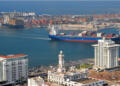
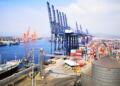
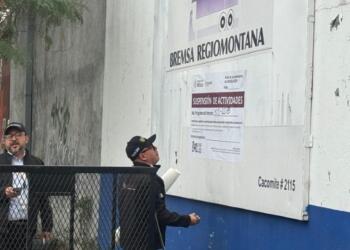
SAN MIGUEL DE ALLENDE, GTO.- Captain Rodolfo Torres Chávez, head of the Manzanillo customs office , attended the ASTOM Summit 2025 to speak about the strengths and weaknesses of Mexico’s most important port to representatives of port terminals, freight forwarders, operators and shipping companies, delivering a speech full of figures, warnings and future projects . But beyond the technical rhetoric, he revealed a paradox that directly affects foreign trade: in Manzanillo, the costs of inefficiency are being paid by the just for the sinners.
Torres, who took office in May of this year, acknowledged what he had loudly denied for years: customs has a historical corruption problem . “Yes, we accept that there are opaque acts (…) there has been a high level of corruption in customs,” he confessed. His arrival in office, he said, sought to break with that modus operandi , but the solutions he has imposed have not been without consequences.
The strict inspection policy currently in place in Manzanillo responds to the detection of abusive practices such as the undervaluation of merchandise. “We have found severely undervalued containers,” he said. The result: more detained containers, more alerts, and more paperwork that clogs up the yards.
Added to this equation is a statistic that illustrates the magnitude of the problem: up to 300 units are subject to customs inspection every day , a disproportionate burden on the available infrastructure and the few inspectors on duty. The immediate effect is the saturation of yards and esplanades, where carriers must wait hours—if not days—for their goods to be inspected.
However, the measure indiscriminately affects all users. Compliant companies have had to face delays, extraordinary costs, and operating losses. As the captain himself acknowledged, “the innocent pay for the guilty ,” since the collective sanctions do not distinguish between tax evaders and those who fully comply with the tax authorities.