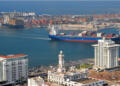
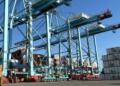
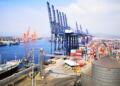
The Mexican Pacific port scene is under unprecedented pressure. Manzanillo and Lázaro Cárdenas, the main gateways for foreign trade along this coast, are the center of the tensions that define Mexican logistics today: accelerated import growth, overwhelmed infrastructure, collapsed customs offices, distrust of railroads, and rising land transportation costs.
At the panel “Challenges for the Ports of the Mexican Pacific,” held as part of the Visiones 2025 event celebrating Intercom ‘s 35th anniversary , representatives from shipping companies, terminals, and the railway sector agreed on a common diagnosis: private investment is accelerating, but the system remains fragmented . And this lack of synchronization threatens to turn the region’s potential into a new bottleneck for national logistics.
Recurring headaches
The tone was set by Torsten Nolting, vice president of Hapag-Lloyd Mexico, one of the leading shipping lines with calls at Pacific ports. “We have many challenges in Mexico, in logistics, there’s a headache every day, but we’re getting used to it. And that’s bad; we have to change things.”
Nolting explained that in 2025, maritime trade faces a double blow: a drop in imports from Asia and, at the same time, a growing gap in national infrastructure. Customs, he said, is the biggest bottleneck: “Especially in Manzanillo, due to problems with foreign trade officials… in May and June, cargo couldn’t leave on time; there were appointments that lasted days or weeks.”
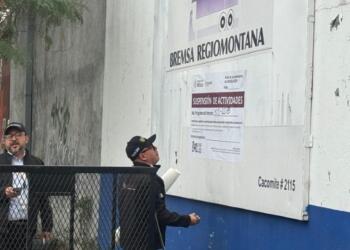
The German-born executive referred to the blockade carried out by customs officials themselves in mid-May of this year, due to alleged poor working conditions, which caused an operational collapse that lasted several weeks , as more than 100 officials were removed from their posts and there was not enough staff to handle the merchandise.
The impact also had a direct impact on land transportation. Although there are enough trucks, many remain stopped inside and outside the port: “The poor trucker loses at least two, three, or four shipments a month, and we all bear the costs,” according to Nolting.
Inefficiency isn’t limited to Mexico. Nolting noted that Asian ports are also saturated: in Shanghai, ships wait two days, in Ningbo three, and in Busan up to five. This delay at origin translates into three or four weeks of backlog in Mexico, which is exacerbated by slow customs and more frequent inspection processes disguised as pro-security rhetoric, but which have also served to increase tax revenue.
Manzanillo: growth as a problem
José Antonio Contreras, CEO of Contecon Manzanillo , contextualized the magnitude of the challenge: “From 2021 to 2024, the growth in imported containers has been 70 percent. It’s difficult to sustain this with the infrastructure capacity , not only at the terminals, but also at customs, access points, and personnel availability.”
The expansion of Contecon’s specialized container terminal—which will be completed in 2026—aims to alleviate the pressure, but Contreras warned that private investment is insufficient without a parallel effort from the state. “We need the Mexican government to invest in port access, roads, and security. Terminals aren’t built in three months, nor do we have 500 people to hire in two days.”
The executive also called for an end to the culture of finger-pointing. “All the problems experienced at the port of Manzanillo are the fault of the entire system . It’s extremely complex, and we all have to accept these inefficiencies.”
Lázaro Cárdenas: The train as a wasted option
If Manzanillo suffers from overload, Lázaro Cárdenas faces another dilemma: its rail infrastructure is underutilized. According to Adriana Covarrubias, Intermodal Sales Manager at CPKC de México , there is a misperception of backlog. “Today, we have around 20 kilometers of rail track within the port, of which 12 or 13 are used for intermodal platforms. The infrastructure exists, but coordination is lacking ,” according to the executive.
He also emphasized that only 20% of imported cargo moves by train , while 80% is transported by truck: “If you transport cargo by truck, you create the bottleneck yourself.” To reverse this trend, Covarrubias emphasized the need for advance planning: synchronizing ships, customs, terminals, railroads, and trucking before the cargo reaches the port.
Private expansions vs. public lags
Along the same lines, Abraham Jiménez, manager of Intermodal Commercial Services at Hutchison Ports Mexico , emphasized that the terminals have aggressively invested in capacity. “ At Lázaro Cárdenas, we are expanding docks to accommodate four state-of-the-art vessels simultaneously , covering nearly a kilometer and a half of dock in a straight line,” he stated.
However, he acknowledged that the rail blockades of past years left scars. “Customers take time to trust returning to the train, and that forces us to reconfigure the terminal to evacuate more cargo by truck,” he stated. This reconfiguration entails new investments, but also higher costs.
Jiménez defended the role of the Hidalgo Intermodal Logistics Terminal (TILH) , developed by Hutchison Ports México as a satellite to relieve congestion in Manzanillo and Lázaro Cárdenas, but insisted that the key lies in coordination . “What we need is to communicate more closely and find joint solutions. And we urge our authorities to grow at the same pace as the private sector,” he stated.
The APM mirror
John Sánchez, commercial director of APM Terminals Lázaro Cárdenas , offered a complementary perspective. “All port terminals in the Pacific are in the process of investing or implementing new projects. That means real capacity, but it’s useless if it’s not accompanied by more agile customs and coordinated processes ,” he said during his participation in the panel.
APM will double its operating capacity from 1.2 to 2.2 million TEUs (20-foot containers) by 2026. However, Sánchez warned that infrastructure alone will not solve inefficiencies if regulatory processes remain slow and fragmented.
Grow without collapsing
The outlook outlined by the five executives confirms a paradox: Mexico is expanding its port and rail infrastructure at an accelerated pace , but the lack of inter-institutional coordination is neutralizing much of these efforts.
The Mexican Pacific logistics system operates like a disjointed puzzle. Shipping companies, terminals, and railroads invest in capacity, but without support in customs, access, and public policies, the result is fragmentation: rising costs, unpredictable delivery times, and user distrust.
The expectation is clear: Pacific ports will continue to receive more merchandise, primarily imported from Asia. To address this scenario , sufficient infrastructure, modernized customs offices with technology and trained personnel , and comprehensive logistics planning that synchronizes the different links in the chain are required.
Only in this way will Mexico be able to transform its Pacific ports into true engines of competitiveness and not the bottlenecks that currently hinder foreign trade .
Comment and follow us on X: @EnriqueDuRio / @GrupoT21