In the logistics industry, talking about digitalization is no longer an option, but a necessity. However, true transformation occurs when technology adapts to the operation and not the other way around, as explained by César Galindo, Director of Technological Solutions at Onest Smart Logistics .
Galindo shared how the company has gone from using Excel spreadsheets to developing its own systems that now manage millions of daily transactions, with a focus on security, flexibility, and empowering its team .
“Everyone talks about Artificial Intelligence (AI) and big data , but the real challenge is identifying what’s useful and what isn’t. Our customers’ information is precious, and if we upload it to a cloud without control, it can become a risk. For us, the priority is ensuring data security and governance,” he explained.
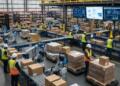
The company’s evolution has been what its director calls an “organic” process. Like most operators, they started with Excel to control small warehouses, but as they grew into larger warehouses, which today total more than 600 thousand square meters (m2) in Mexico, and thousands of SKUs (code that identifies a product), it was necessary to design a custom solution .
The company decided to invest in developing its own management system, One System , built from the ground up based on its processes, allowing them to respond to the specific needs of each client.
“We don’t depend on third parties. If they ask us for a different arrangement, we do it. Flexibility is key,” Galindo noted.
The company currently operates with Oracle databases in the cloud, with redundancy in Mexico and the United States.
This way, operations remain online even in the event of contingencies, complemented by a robust cybersecurity framework that includes AI filters, facial recognition, geolocation, and biometrics for warehouse access.
On the other hand, far from the view that automation replaces personnel, Onest Smart Logistics seeks to make technology an ally.
“We want to empower our people to work faster, more accurately, and at a lower cost. AI and digital systems are a support, not a replacement,” Galindo emphasized.
To this end, the company has implemented key innovations in its operations, such as real-time dashboards for managers and customers, allowing them to view orders, productivity, and fulfillment times.
Additionally, as part of facilitating the work of its employees and operations, it is in the process of incorporating glasses with vision and voice that provide instructions to operators and allow them to work hands-free.
In addition, it is beginning to use image-recognition drones for inventory , which incorporate software developed by the company itself.
The company’s technological vision focuses on the strategic integration of hardware , software , and artificial intelligence, with a guiding principle of data security and reliability.
“The future of logistics lies in real-time information and the ability to adapt to the extreme customization that consumers demand. Our role is to ensure that customers receive secure, flexible, and scalable solutions,” Galindo emphasized.
Comment and follow us on X: @jenna_GH_ / @GrupoT21