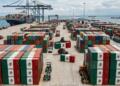
On August 15, a new tariff increase went into effect for products imported from countries without a trade agreement with Mexico, such as China, increasing the tariff from 19% to 33.5% for transactions made via parcel or express courier services.
The measure, published in the General Rules of Foreign Trade of the Tax Administration Service (SAT) and in the Official Gazette of the Federation (DOF) , was part of a strategy by the federal government to strengthen national production against foreign platforms that dominated online consumption in recent years, such as Temu and Shein , which recorded increases of up to 614% in their users in a single year.
According to Ilan Epelbaum, CEO of Mail Boxes Etc. (MBE) in Mexico, the direct impact of the adjustment was the reduction of the margin that made the ultra-competitive prices of these marketplaces viable .
“We witnessed the beginning of a new era in cross-border e-commerce logistics. For many platforms operating under low-cost models, the increase in tariffs completely changed the operational landscape, delivery times, and, above all, final consumer prices,” the executive said in a statement.
The end of “cheap” e-commerce
In recent years, Shein and Temu conquered the Mexican market with below-average prices, thanks to a dropshipping model from Asia, without warehouses in the country, and a more flexible tariff scheme for low-value shipments. However, with the 33.5% tariff, that logic began to change.
According to Epelbaum, the price gap compared to domestic options or platforms operating under the United States-Mexico-Canada Agreement (USMCA) was no longer as wide, as these products were exempt or taxed only 17% because they were backed by free trade agreements.
The change did not mean the exit of Temu or Shein from the Mexican market, but it did reduce their structural price advantage.
“What happened wasn’t a punishment for certain brands, but rather a natural evolution of the commercial ecosystem. The rules changed to level the playing field, and that required different, more strategic logistics focused on regulatory efficiency,” Epelbaum added.
Logistical implications
The tariff adjustment brought with it logistical implications that affected both marketplaces and thousands of Mexican small and medium-sized enterprises (SMEs) that relied on cross-border trade to import inputs or finished products.
Among the main effects mentioned by MBE are:
- Increased documentation and customs clearance times, as they are not covered by preferential treaties.
- Higher costs for temporary storage.
- The need to reorganize routes, suppliers, or even import categories.
From the perspective of Mail Boxes Etc., these measures were part of a regional trend seeking to reorganize e-commerce based on criteria of traceability, equity, and formality.
“We observed a reconfiguration of import patterns in the last quarter of the year. Not necessarily fewer packages, but with different origins, delivery times, and logistics schemes. Brands that understood this early, and the companies that supported them, would set the tone in 2026,” Epelbaum emphasized.
As a result, Temu and Shein remained affordable options in Mexico , but no longer with the same savings or under the same conditions. The new tariff policy did not seek to curb digital commerce, but rather to transform it, positioning logistics as a strategic axis for competitiveness.
Comment and follow us on X: @GrupoT21