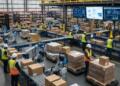
Tire manufacturer Michelin maintains its consolidated production plans in León, Guanajuato, and has not ruled out expanding capacity at its León plant, where it currently uses nearly 70% of the 120 hectares of land it covers.
“Any new investment phase will be subject to the evolution of demand in the premium segment it is focused on,” the French-based firm emphasized in a statement.
At the media day organized by the Guanajuato Automotive Cluster (CLAUGTO) , attendees toured the facilities that make up the León plant, where car and truck tires are produced with cutting-edge technology and high quality standards.
“Attendees learned firsthand about the most important stages of the process, as well as initiatives to promote sustainable mobility, the circular economy, and engagement with the Guanajuato community,” the firm stated.
The León factory, which is the company’s most modern, is part of a global manufacturing network with 86 factories in 19 countries, which together employ more than 87,000 employees worldwide.
Since its launch in 2018, it has concentrated cumulative investments of $910 million in two phases and has produced 15 million tires.
The plant’s workforce combines experience with a significant representation of young professionals, with a workforce of two thousand employees , 75% of whom are under 35 years old, and a strong focus on innovation.
“Female participation represents 38%, above the historical average for heavy manufacturing in Mexico. This combination undoubtedly generates continuous learning in a safe environment,” the company emphasized.
Commitment to the community and sustainability
In 2024, Michelin signed agreements with the National College of Technical Professional Education (Conalep) and the Romita campus of the College of Scientific and Technological Studies of the State of Guanajuato (Cecyteg) , which will incorporate 21 students in supervised internships.
“These actions are part of the community support plan, which aims to provide better professional opportunities by improving the educational level of technical schools,” he noted.
At the León facility, various actions are being carried out to decarbonize its processes.
Michelin explained that, as one of the Group’s newest plants, this plant was designed to operate on 98% clean energy, compared to other industrial sites that use gas.
Thanks to its use and sustainable design, the facility has managed to reduce its Scope 2 carbon dioxide (CO2 ) emissions by 96%.
It has also worked on implementing the local to local strategy , which consists of bringing production lines closer to local customers, thereby reducing CO2 emissions .
“An example of this is the relocation of tire production for one of its Original Equipment customers in Celaya, Guanajuato, achieving a reduction of 5,300 kilometers (km), which previously meant more than two days by road from Canada, to just 130 km, currently two hours by road. This represents a 98% reduction in distance and a reduction of 3.3 tons of CO2 emissions per trip,” he emphasized.
During the visit, Michelin reiterated its commitment to manufacturing 100% sustainable tires by 2050 .
“Currently, our tires incorporate an average of more than 31% renewable and recycled materials. To achieve our goal, Michelin plans to increase this proportion to 40% by 2030 and 100% by 2050,” emphasized Juan Pablo Ríos, Director of Public Affairs and Communications for Michelin Mexico and Central America.
It’s worth remembering that Faiez Pisal has been Michelin’s new president and CEO of Mexico and Central America since July 1. Also, on June 9, the company announced it had decided to close operations at its Querétaro plant to focus its efforts on the León factory.
Comment and follow us on X: @GrupoT21