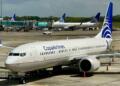
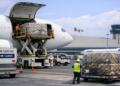
When Mediterranean Shipping Company (MSC) announced its entry into the air cargo industry in late 2022, the move was seen as a natural extension of its multimodal ecosystem. The creation of MSC Air Cargo was not merely a timely gamble , but rather a response to the need to offer comprehensive solutions in a business environment characterized by speed, specialization, and the resilience of supply chains.
The first flight, from China to Mexico, immediately underscored the strategic importance of the Latin American country within this new network. It was not an isolated trial, but rather the starting point of an operation designed to facilitate global flows of e-commerce and high-value exports.
“From the first flight, the role that Mexico plays in this service made sense, as a natural complement to maritime transport,” recalls Victor Monroy, general manager for Mexico and Central America at MSC, in an interview with T21, emphasizing that air cargo does not replace the ocean business, but rather complements it.
Mexico is emerging as a regional facilitator , supporting selective connectivity and facilitating intraregional flows. “ Mexico is a key player in MSC Air Cargo’s global service ; it’s an important hub for connecting with the rest of Latin America,” explains Monroy. Added to this is an internal phenomenon: the country is beginning to develop its own air cargo ecosystem, driven by new routes and the demand from sectors requiring more precise logistics solutions.
This dynamism is reflected in the volumes. The cargo composition reveals the airline’s strategy: pharmaceuticals, perishables, aircraft engines, prototype and luxury vehicles, as well as imports linked to Asian e-commerce. To handle these commodities, the company relies on certifications such as IATA CEIV Pharma and IATA CEIV Fresh , which guarantee processes aligned with the most demanding industry standards.
Comment and follow us on X: @evandeltoro / @GrupoT21