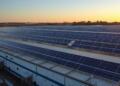
The energy transition has ceased to be a technical debate and has become an operational and economic imperative. Between global pressure to decarbonize, the need to strengthen national infrastructure, and the arrival of new investments resulting from nearshoring (relocation of production lines), Mexico faces a scenario in which regulatory clarity and technological innovation will determine its competitiveness
In that context, Aidana Velázquez , Institutional Relations Manager at Enlight , explained how the electricity sector is being reconfigured and what opportunities are opening up for the industry.
According to Velázquez, 2024 and 2025 have represented a turning point for the regulatory framework of the electricity sector. The Electricity Sector Law , published in March, and the regulations released in October , have more precisely outlined how private enterprise can participate in generation, self-consumption, and storage .
The central focus, he explained in an interview, is to establish clear rules to incentivize investment and make new infrastructure viable.

“The law already hinted at the forms of participation; the regulations help us see how it will be implemented in practice,” he noted.
Among the most relevant changes are the 46% limit for private participation in large-scale generation, the expansion of the distributed generation threshold from 0.5 megawatts (MW) to 0.7 MW , and the expected new self-consumption scheme for capacities between 0.7 and 20 MW, with simplified procedures, in addition to the formal recognition of energy storage within the electricity value chain.
This last point is key, since for the first time an activity that will be essential to integrate variable renewable energies and avoid interruptions in industrial operations is being incorporated into the regulations, Velázquez stressed.
Although Mexico is one of the countries with the highest solar irradiation in the world and has highly productive wind corridors, its progress in clean energy has lagged behind other nations in the region.
“We were on track to reach a goal of 35% clean capacity , but we are currently at around 24 percent . In contrast, countries like Chile already exceed 48% clean generation,” Velázquez explained
The official diagnosis agrees: the recently published Electricity Sector Development Program (Prodesen) shows a considerable delay and sets a goal of 38.5% for the coming years.
“The numbers tell us there is much to be done. The global trend is clear: energy matrices must become increasingly cleaner,” he stated.
One of the biggest current pressures on the electricity grid comes from nearshoring . With the arrival of new industrial parks and manufacturing centers, energy availability has become a decisive factor for companies to locate there.
“Mexico was being left out of the game due to a lack of energy availability in certain areas,” Velázquez explained.
To address this, the regulation incorporates mechanisms that make it easier for companies to generate their own energy on-site through self-consumption or distributed generation schemes.
This prevents energy shortages from delaying the installation of new plants, provides operational certainty to energy-intensive industries such as automotive or electronics, reduces long-term energy costs, and contributes to meeting ESG (Environmental, Social , and Governance ) commitments .
The manager highlighted that industrial consumption represents 50% of the energy in Mexico , which underscores the importance of enabling decentralized solutions for this growing demand.
Velázquez emphasized the need to understand that industrial operations cannot depend solely on variable renewable sources such as the sun or wind.
Therefore, the new schemes combine solar or wind power generation , backup with gas or other conventional sources, and energy storage systems to ensure continuity, quality and energy arbitrage.
The regulation foresees new rules for storage no later than June 2026, which will boost its adoption.
Mexico has the natural resources and now a more defined regulatory framework ; the challenge is to accelerate the adoption of solutions that allow energy to stop being a hindrance and become an enabler of growth.
“Demand continues to increase. The great opportunity is to leverage nearshoring to make this expansion sustainable and based on clean energy,” he emphasized.
Comment and follow us on X: @jenna_GH_ / @GrupoT21