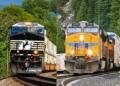
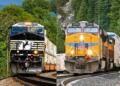
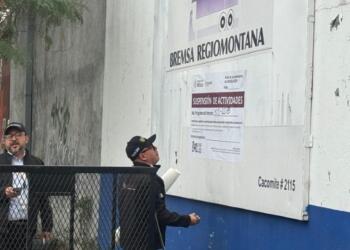
Union Pacific (UP) reported that Mexican crews have begun moving trains from a rail yard in Mexico to one near Eagle Pass, Texas, improving safety and reducing the time required for these types of maneuvers.
The railway company stated that this change, which began on November 20, reduces by 50% the time it takes to move trains across the international bridge compared to the previous method of changing personnel at that point.
“ This change improves crew safety, strengthens border security, and creates a smoother process at this key rail gateway . Interchanging trains within a secure rail yard is a proven method and allows us to operate more safely and efficiently,” said Eric Gehringer, UP Executive Vice President of Operations.
In this regard, Ferromex ‘s Mexican partner crews will now travel seven miles (approximately 11.2 kilometers) from the border to the nearby Eagle Pass yard , where they will be handed off to a U.S. crew. This follows their training and qualification by Union Pacific , including certification under Federal Railroad Administration (FRA) standards .
Meanwhile, the railroad’s employees will continue to manage all operations based in the United States, including incoming train control, railcar shunting, outgoing train construction, and service to local customers.
The company noted that prior to this updated process, personnel changes at Eagle Pass were conducted on the single-track international bridge, forcing trains to stop while crews disembarked and recrossed the structure. This process took between 30 and 40 minutes and increased the time a train remained idle at the site , increasing crew exposure and the risk of blocked level crossings, vandalism, theft, or other safety concerns.
“Moving the link to a controlled rail yard reduces these risks and allows for a safer and more efficient transition. Furthermore, seamless transshipments at the border improve the rail industry’s ability to compete and reduce truck traffic,” he emphasized.
He indicated that the updated procedure is part of the U.S. Customs and Border Protection’s (CBP) Federal Secure Corridor Initiative , as well as the results of the pilot project conducted earlier this year.
Comment and follow us on X: @GrupoT21